2012issue C086-7
Precommit size before a one-day policy shock
After a widely watched 2012 central-bank policy announcement, the S&P 500, Dow Jones Industrial Average, and NASDAQ declined in one policy-shock-session and returned to prices last observed five sessions earlier. Editorial reading treats that day as a classroom for precommitted-size, reserved margin, and leverage caps set before entry, so a later alert cannot enlarge the loss already accepted.
- A policy-shock-session can return major US indexes to prices last observed five sessions earlier, so precommitted-size should be set from account equity, volatility, and stop distance before entry.
- Capped-exposure should reserve margin for a same-day unwind and stay in force even if price spikes through a stop or a 50-day moving average.
- Information-lag makes after-the-move resizing unreliable, so money-management rules belong in the system before an alert-driven-frenzy begins.
- Trying to watch every market can hide the overall exposure picture. A structure that keeps maximum risk predefined can leave a trade open through an adverse spike.
A one-session policy shock
After a widely watched 2012 central-bank policy announcement, the S&P 500, Dow Jones Industrial Average, and NASDAQ declined 2.23%, 1.96%, and 2.44% in a single session. That single policy-shock-session returned those indexes to prices last observed five sessions earlier. A rating action covering 15 of the world's largest banks was cited as contributing to the same session's move.
Energy and metal sectors showed a comparable one-day reversal while the US dollar continued to strengthen amid euro-area concerns. After the breakdown, the broader indexes were trading below their 50-day moving averages, a band that two sessions earlier had appeared able to act as support.
One-session losses after the Operation Twist decision
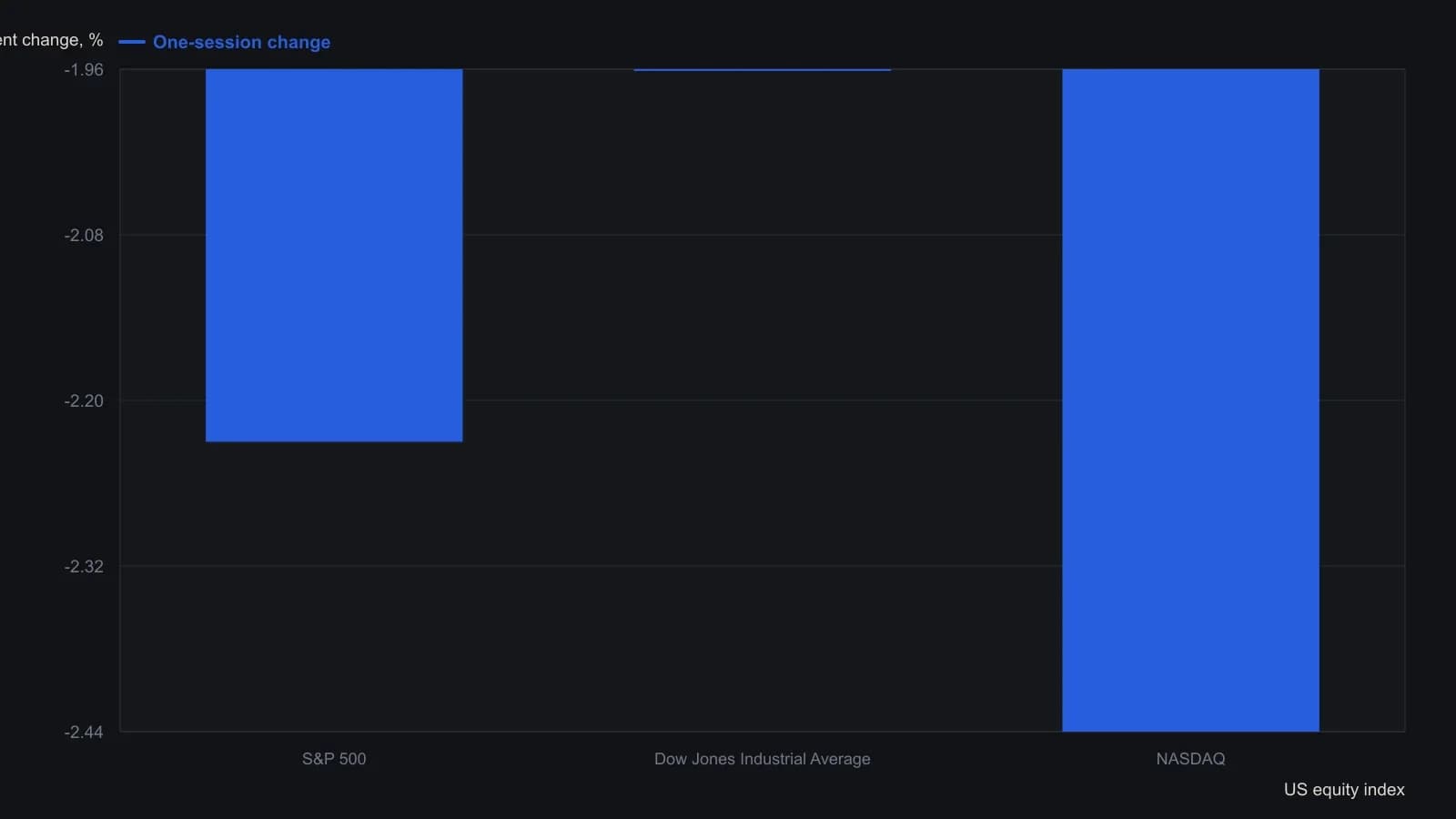
The editorial says energy and metals reset in a similar way and that the US dollar kept rising on eurozone concerns, but it gives no percent changes for those markets.
Embed the filters before alerts arrive
The archive commentary argues that this faster damage to open results is a reason to strengthen money-management rules and embed them in the trading system rather than apply them after alerts arrive.
Editorial reading applies three filters to that lesson. Precommitted-size is the position quantity set from account equity, volatility, and stop distance before entry so a later spike cannot expand the planned loss. Margin is reserved for a same-day unwind, and leverage is capped before entry. Capped-exposure is the hard maximum loss or margin commitment that stays in force even if price spikes through a stop or a moving-average level. Information-lag makes after-the-move resizing unreliable. An alert-driven-frenzy can push a discretionary trader to abandon exposure rules that should already be in the system.
Focus and a predefined maximum
Attempting to watch every market is described as a focus error that can hide the overall exposure picture. A listed-derivative note in the same issue describes a structure that leaves a trade open through an adverse spike while keeping maximum risk predefined.
Editorial reading: that structure is consistent with capped-exposure. The trade may stay open, but the maximum loss accepted before entry does not grow when the spike arrives.
All readings on this track · 25 readings
- 1988Two-sided optimization for volatility-scaled breakout rules
- 1990Weekly range volatility as a tactical regime filter
- 1993Heat first, then contract count on a weekly close-only breakout
- 1994Shared sigma for trend entries, retests and stops
- 1995The promised result as one testable trading procedure
- 2001Convert a survival ceiling into a volatility filter
- 2002Bound the next loss before the bear trade
- 2004Dollar-loss tolerance versus percent-of-equity stops
- 2004Bounded risk before entry: stop, size, and leverage
- 2006Position sizing as the pre-trade bound on loss and exposure
- 2006A trend-regime matrix for volatility position sizing
- 2011A premarket range checklist for opening-hour breakouts
- 2011Stop-defined share count on a clustered intraday short
- 2012Mechanical system design with strategy, signals, and size
- 2012Precommit size before a one-day policy shock
- 2013R-multiple expectancy, drawdown, and volatility position sizing
- 2014Constructing trend-aware slope-divergence rules
- 2014Pretrade drawdown fences and volatility sizing
- 2015Convert pip value into cash before a forex lot size is chosen
- 2016Expectancy as an execution skill rather than a backtest score
- 2017Volatility parity equalizes the ticket; implied volatility is a regime dial
- 2018Wide-range breakout rules from chart volatility
- 2019A structure-based stop, then resize or pass
- 2020A cash rule that zeros a trend book on extreme volatility and a short losing window
- 2025R-multiples before you size up