2015issue C1126-27
Filtering option trades by bid-ask width
A quoted bid-ask spread on a stock, exchange-traded fund, or option is treated as an immediate transacting cost that a newly purchased long must recover before it can show a gain. The historical workflow applies a 0.05 ceiling on quote width so that this implementation cost stays small.
- The displayed bid-ask spread is treated as an immediate transacting cost. A newly purchased long must recover that implementation cost, before commissions, before the position can show a gain.
- A nickel filter of 0.05 maximum quote width is used so that the transacting cost stays small.
- Liquidity is judged first by quote tightness. Open interest and traded volume are secondary clues, and underlyings with deeper cash-market liquidity are described as usually supporting tighter option markets.
- Call quotes on a highly liquid large-cap name are shown with widths near 0.05, and an in-spread order is described as often fillable within that band. A less liquid biotechnology name is shown with a 0.45 width, a gap characterized as common among biotechnology and pharmaceutical underlyings.
The bid-ask as an immediate charge
A quoted bid-ask difference on a stock, exchange-traded fund, or option can be treated as an immediate transacting cost. That bid-ask spread is the displayed gap between bid and ask, and it is the charge for crossing the market.
A newly purchased long must recover this implementation cost, before commissions, just to get back to even. The option premium is the quoted contract price. A long needs this price to rise by more than the spread before the position can show a gain.
Recovering a 0.10 entry gap
An August-dated 40-strike call shown at 2.00 bid and 2.10 ask has a 0.10 width. That width equals 10 dollars per standard contract if the call is bought at the offer and sold at once at the bid.
Offsetting that 0.10 entry gap requires the bid to reach 2.10. A later 2.10 by 2.18 quote is presented as a breakeven exit when commissions and fees are ignored.
A nickel filter on quote width
A 0.05 ceiling on quote width is used as a screen so that the transacting cost stays small. That nickel filter is the maximum width allowed under this workflow.
Tightness first, then other liquidity clues
Quote tightness is treated as the leading liquidity clue. Open interest and traded volume are recognized as additional but secondary clues. Liquidity here means ease of entering and exiting near the touch, judged first by quote tightness and only secondarily by volume or open interest.
Underlyings with deeper cash-market liquidity are described as usually supporting tighter option markets.
Nickel markets and wide biotechnology quotes
Call quotes on a highly liquid large-cap name are shown with widths near 0.05. A buy limit placed inside the market, an in-spread order, is described as often fillable within that nickel band.
A less liquid biotechnology name is shown with a 0.45 option width. Similarly wide markets are characterized as common among biotechnology and pharmaceutical underlyings.
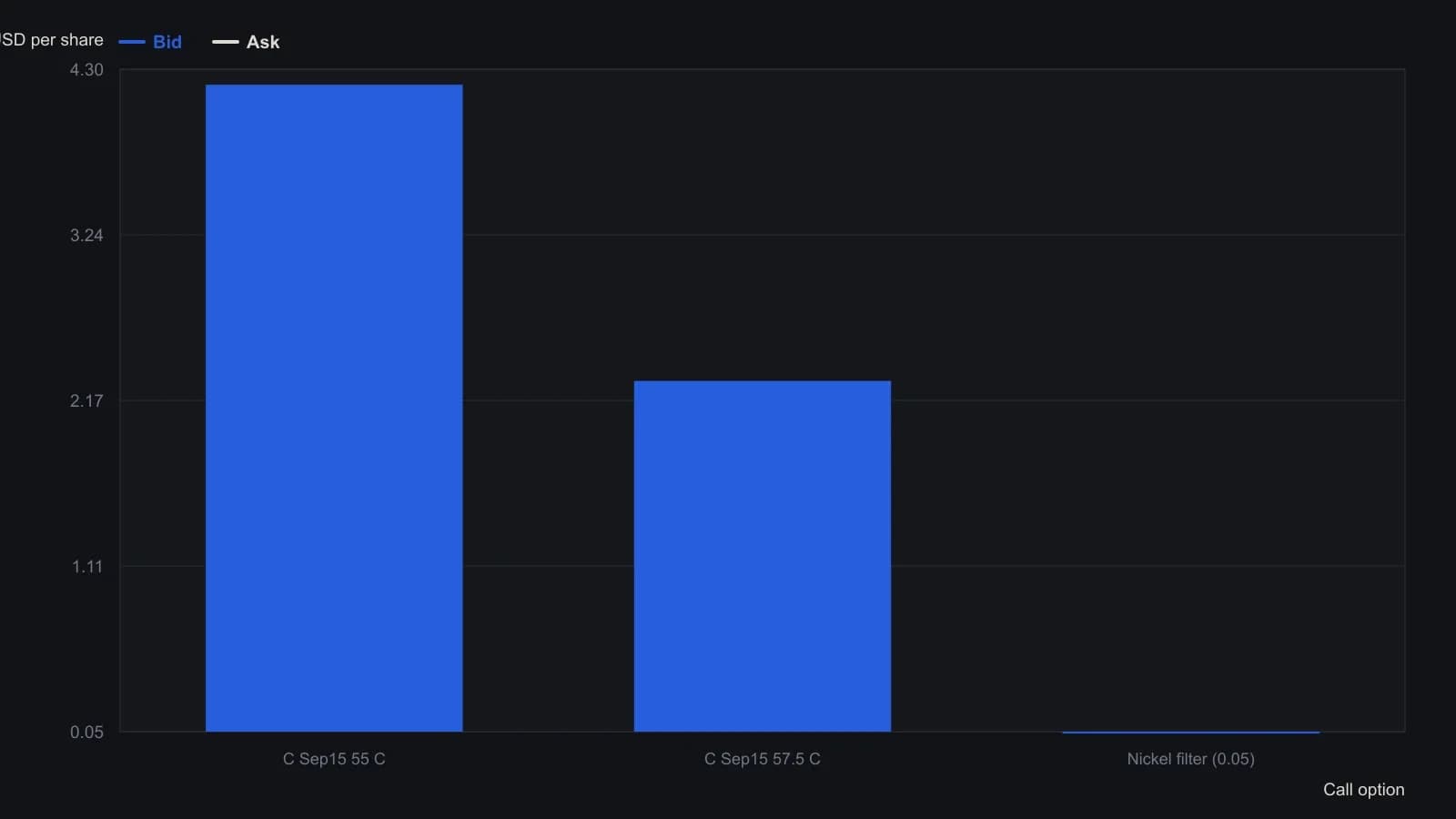
Citigroup September 2015 call quotes
All readings on this track · 32 readings
- 1985Matching ticket size to negotiable commission schedules
- 1985Minimum tickets can price a small book out of its own exit
- 1992Stop-order slippage as an execution cost filter
- 1993Cost-aware walk-forward evaluation of pattern-detector signals
- 2001Audit high-turnover operating conditions as one procedure
- 2002Front-load futures commission and slippage
- 2005Inactive account fees as hidden implementation cost
- 2010A pre-trade liquidity screen for futures contracts
- 2011Currency option venues, spreads, clearing, and premium cost
- 2012Filter futures contracts by liquidity and implementation cost
- 2012Futures commission versus one tick of cost
- 2012Ranking futures liquidity for executable orders
- 2013Filter option day trades by spread, volume, and fees
- 2013Filter futures by liquidity, open interest, and effective margin
- 2014Book futures data fees as implementation cost
- 2015Use a futures liquidity rank as a pre-trade checklist
- 2015Filter unexecutable futures by liquidity, open interest, and margin
- 2015Futures liquidity ranking as an execution filter
- 2015Filtering option trades by bid-ask width
- 2016Exchange quote fees as execution costs and liquidity filters
- 2016Filter futures by liquidity, open interest, and margin cost
- 2016Comparing dollar-index futures execution costs and liquidity
- 2016A futures liquidity ranking as a screen for executable orders
- 2017Filter a futures board by liquidity, open interest, and implementation cost
- 2017Filter futures contracts by liquidity and margin cost
- 2017How residency rules raise futures implementation costs
- 2018Screen listed futures by liquidity, open interest, and margin
- 2018Contract selection is the first filter on competing bitcoin futures
- 2018Filter futures execution by liquidity and margin
- 2018Commission analysis for brokerage execution costs
- 2019Ranking futures liquidity before you size the order
- 2020Brokerage selection as an implementation-cost problem