2003issue C051-6
Constructing rounded bottoms, triangles, and pennants
A rounded bottom, a triangle pattern, and a pennant are finished only after scale, boundary touches, a duration-gate, and a confirmation-close are in place. TradersWeek editorial: use those construction checks to accept or reject the drawing before writing a trade hypothesis.
- A rounded bottom is a gradual saucer or bowl after an advance, commonly read on the weekly scale, and construction is complete only after a close above the left bowl-lip high.
- Volume can trace a bowl with the price saucer, and a declining volume line belongs in the same construction profile as a falling wedge until the boundary break.
- A contracting look-alike shorter than three weeks is constructed as a pennant; a falling wedge should last at least three weeks, rarely more than four months, and is unfinished with fewer than five boundary touches.
- An expanding triangle variant uses a horizontal upper line and a descending lower line; a partial decline is read only after both lines already have two touches.
Construction checklists
TradersWeek editorial: treat these uncommon bullish shapes as construction checklists. Chart scale, boundary touches, a duration-gate, and a confirmation-close let a rounded bottom, a contracting or expanding triangle, or a short pennant be accepted or rejected before any trade hypothesis is written.
The historical workflow is a drawing test. A rounded bottom, a triangle pattern, and a flag and pennant are finished only when those construction cues are present.
Rounded bottom
A rounded bottom is constructed as a gradual saucer or bowl after an advance. The weekly scale is commonly used because the arc is large, though that scale is not required.
Construction of a rounded bottom is complete only after a close above the left bowl-lip high. The bowl-lip is the left-side high that a rounding bottom must close above before construction is complete. If a later handle draws a downsloping line, the next construction cue is an upward pierce of that handle line.
Volume during a rounded bottom can itself trace a bowl, so the volume arc belongs in the same construction reading as the price saucer.
A large ascending triangle can occupy the approach to a rounding bottom, so a flat-top triangle is a valid lead-in geometry rather than only a rising trend into the bowl.
Rounded bottom after the mid-1999 selloff
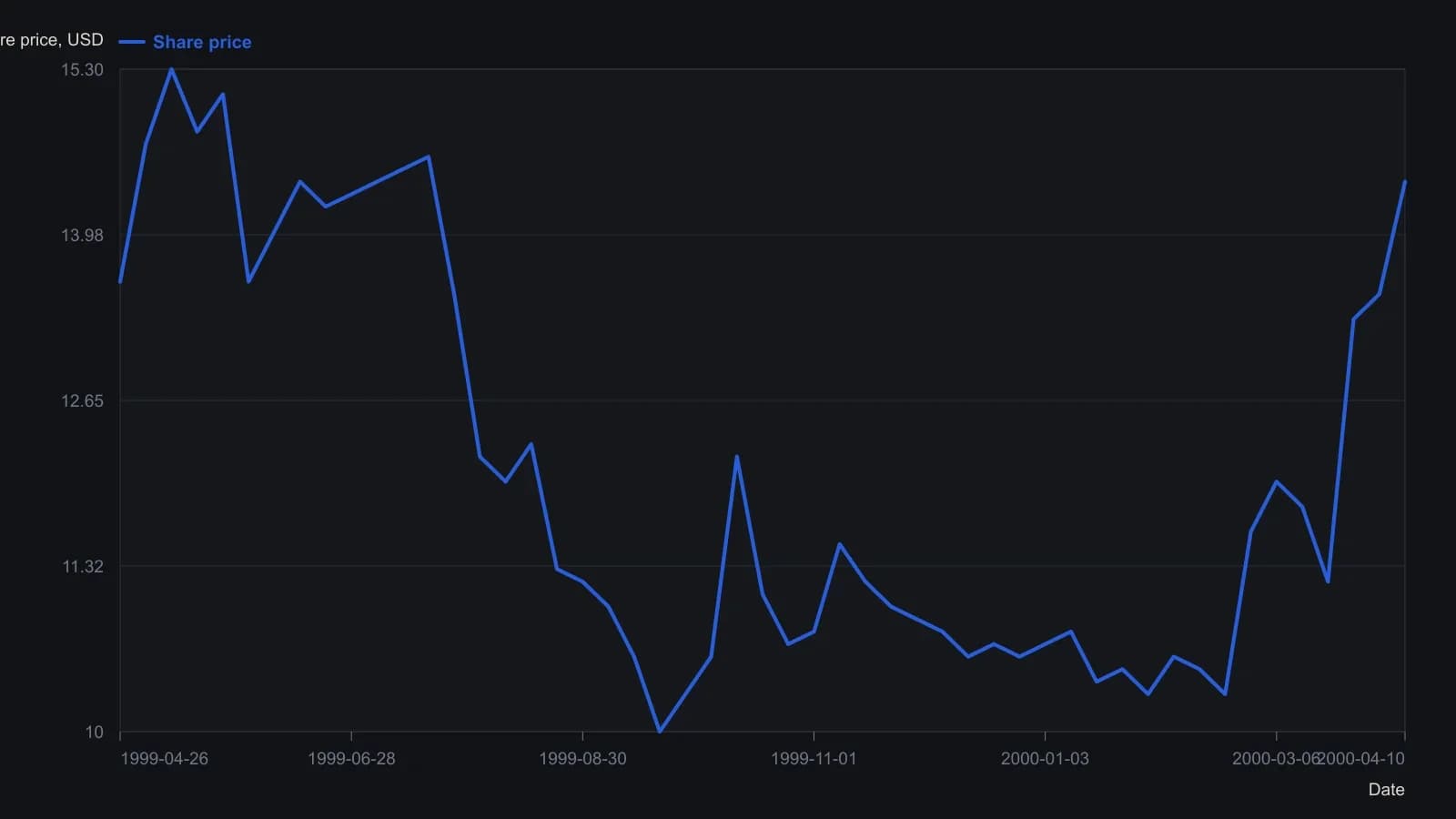
Weekly representative closes lifted from the daily bars. The print supports about 0.1 price resolution and publishes no numeric table.
Falling wedge, pennant, and the duration-gate
A falling wedge is constructed from two downward-sloping boundaries that join at an apex, each with at least two minor-high and two minor-low touches, frequent crossings, and little empty space inside the lines.
A contracting look-alike shorter than three weeks is constructed as a pennant rather than a falling wedge. A falling wedge should last at least three weeks and rarely more than four months. That span is the duration-gate that separates a falling wedge from a pennant.
Treat a falling-wedge drawing as unfinished when it has fewer than five boundary touches, typically two on one line and three on the other.
Along a falling wedge, volume typically recedes until the boundary break, so a declining volume line is part of the construction profile.
Expanding triangle and the partial decline
An expanding triangle variant is constructed with a horizontal upper line and a descending lower line so the range widens over time.
A partial decline is a pullback from the upper boundary that turns up before reaching the lower boundary. A partial decline is read only after both lines already have two touches.
All readings on this track · 14 readings
- 1990Constructing falsifiable reversal patterns from price structure
- 1995Cup-with-handle construction: confirm the cup, the handle, then the breakout
- 1995Cup-completion cheat before the handle breakout
- 1998Constructing rounded-bottom cups as testable entries
- 1999Rounded bottom landmarks, invalidation, and breakout rules
- 2003Constructing rounded bottoms, triangles, and pennants
- 2006A five-by-five grid that accepts or rejects a cup
- 2006NTRI and the 2005 bowl breakout case
- 2006Rounded-bottom screens, first-try breakouts, and Fibonacci retracements
- 2007Constructing rounded bottoms as multi-year bases
- 2011Early semi-cup construction from the left rim and base
- 2011Early rounded bottom recognition on a locked log-price grid
- 2013Rounded turns as slope-first trade hypotheses
- 2017Evaluating a rounded bottom as a testable payoff structure