2012issue C0626-33
Design before you trade: testing mechanical systems
Archive material treats a trading system as a complete set of enter, exit, and stay-out signals, then judges that procedure by the all-trades net result rather than by orderly chart arrows. Ideas are to be studied, tested, and confirmed as one procedure before real capital is used.
- A trading system is a complete set of signals that specify when to enter, exit, or stay out, from two rules to hundreds of lines of code.
- Chart arrows and connecting lines are not enough. The archive treats a system as working only when the all-trades net result is a profit.
- Ideas must be studied, tested, and confirmed as one procedure before real capital is used. Skipping that homework exposes the account to total loss.
- Design should target a repeatable slice of movement, screen for catchable swing width, and put possibility analysis and a written plan in place before the first live order.
A complete set of signals
A trading system is a complete set of signals that specify when to enter, exit, or stay out. Archive material allows that set to be as simple as two rules or as elaborate as hundreds of lines of code. The object to evaluate is the whole procedure, not a single mark on a chart.
Looks are not evidence
Chart arrows and connecting lines are not sufficient evidence that a system works. A system is judged to work only when the all-trades net result is a profit.
An illustrated MACD example produced buy and sell arrows that looked orderly on a daily Russell 2000 chart, yet the strategy performance report showed an all-trades net loss of $92.42.
Ideas must be studied, tested, and confirmed as one procedure before real capital is used. Skipping that homework exposes the account to total loss.
A repeatable slice, not every turn
It is not possible to capture every high and low. System design should target a repeatable slice of movement rather than perfection.
Potential-harvest-width screening can flag instruments that oscillate in tradable waves even when a buy-and-hold path is net negative. Sorting a scanner or radar list by PHW total isolates the widest, most catchable swings before a mechanical rule set is applied.
Losses belong in the plan
Losses are an expected cost of operating a system. Possibility analysis, marked highs and lows, and a written plan belong before the first live order.
MACD system profit and loss on the Russell 2000
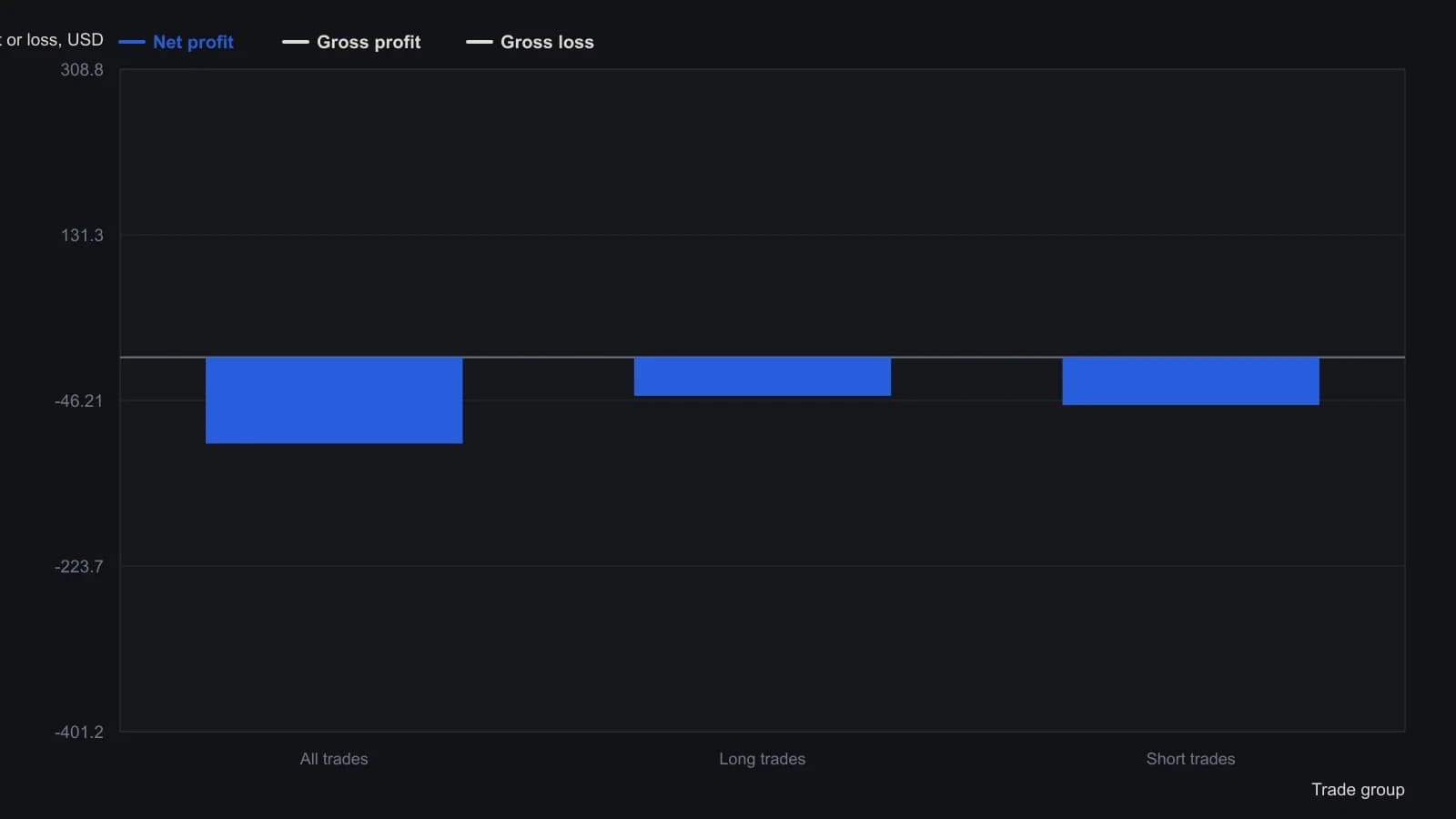
Commission and slippage are both reported as $0, so the net loss is from trade outcomes alone.
All readings on this track · 22 readings
- 1995A pre-trade checklist that bounds loss before the order
- 1998Ledger audit of exits, payoff, and overlap
- 1998A return-to-loss filter for drawdown-aware evaluation
- 2000Pair historical volatility with return-to-loss filters
- 2001Credit-spread construction that can fail before any order is sent
- 2002Evaluating mechanical systems in a traders market
- 2002Profitability as a bound implied by RWL and commission
- 2004A day-trading breakeven matrix for size and win rate
- 2006Sit out, size and expectancy as one procedure
- 2006A testable intraday procedure from setup to stand-down
- 2007A planned liquidity offer at the inflection point
- 2011A style-neutral expectancy filter for system evaluation
- 2011Separate buying power from posted risk capital
- 2012Design before you trade: testing mechanical systems
- 2014Ideal trader hindsight as a pretrade filter
- 2014When expectancy and drawdown limits disagree
- 2015Signal, confirm, and invalidate before the trade
- 2015Price the win, stall, and loss before a stock entry
- 2016Construct expectancy by bounding losses and winner size
- 2017Estimate expectancy before you accept the trade
- 2017Size ladder tests for drawdown caps and expected value
- 2017Evaluate a high-yield correlation break as one locked procedure