2013issue C1149-52
A mechanical trend toolkit that turns screens into one entry-exit procedure
This archive case study follows a mechanical add-on that automates a published screening process. Long scans wait on a bullish-regime rule, candidates still have to match a valuation and growth profile, and entry waits for the stock to leave a pullback. Advisor notes then package a suggested entry price, exits, and a target.
- The toolkit is presented as a mechanical add-on that automates a published screening process so candidate lists come from predefined explorations rather than ad hoc chart picking.
- A bullish-regime rule has to pass before long scans are used, and long or short candidates still have to match an underpriced growth profile or an overvalued poor-growth profile.
- Rule-based-entry is not automatic at the screen. The procedure waits for pullback-confirmation, such as an up day that takes out the prior down day's high.
- Advisor commentary packages a suggested entry price, exits, and a target, and the same mechanical-trading-system can be run on five-minute charts for a shorter holding horizon.
A mechanical add-on instead of ad hoc chart picking
The toolkit is presented as a mechanical add-on that automates a published screening process so candidate lists can be generated from predefined explorations rather than ad hoc chart picking.
The archive describes that workflow as a historical sequence. Screens, side selection, confirmation, and packaged exits are set out as steps that stay in place for the holding period.
A regime-filter before long scans
A bullish-regime rule is specified as the 20-day S&P 500 simple moving average sitting above the 50-day average with a positive 50-day slope before long scans are used.
Until that market-state test passes, the long side of the scan is not used.
A valuation-and-growth-screen for each side
Long candidates are supposed to be underpriced with solid growth potential, while short candidates are supposed to be overvalued with poor growth potential.
An ideal pullback-in-uptrend candidate is described as having an F-score above 5 plus an underpriced, strong-growth profile.
Pullback-confirmation before rule-based-entry
Entry is not automatic at the screen. The procedure waits for the stock to show it is leaving the pullback, such as an up day that takes out the prior down day's high.
Only after that confirmation does the sequence treat the name as an entry rather than as a pullback that may still be a breakdown.
Entry, hold, and exit as one packaged procedure
Advisor commentary is described as including a suggested entry price, exits, and a target, so entry, hold, and exit are treated as one packaged procedure.
Two advisors are specified for intraday use on five-minute charts, showing the same mechanical process can be run on a shorter holding horizon.
NPSP coiled-spring entry, stops, and targets
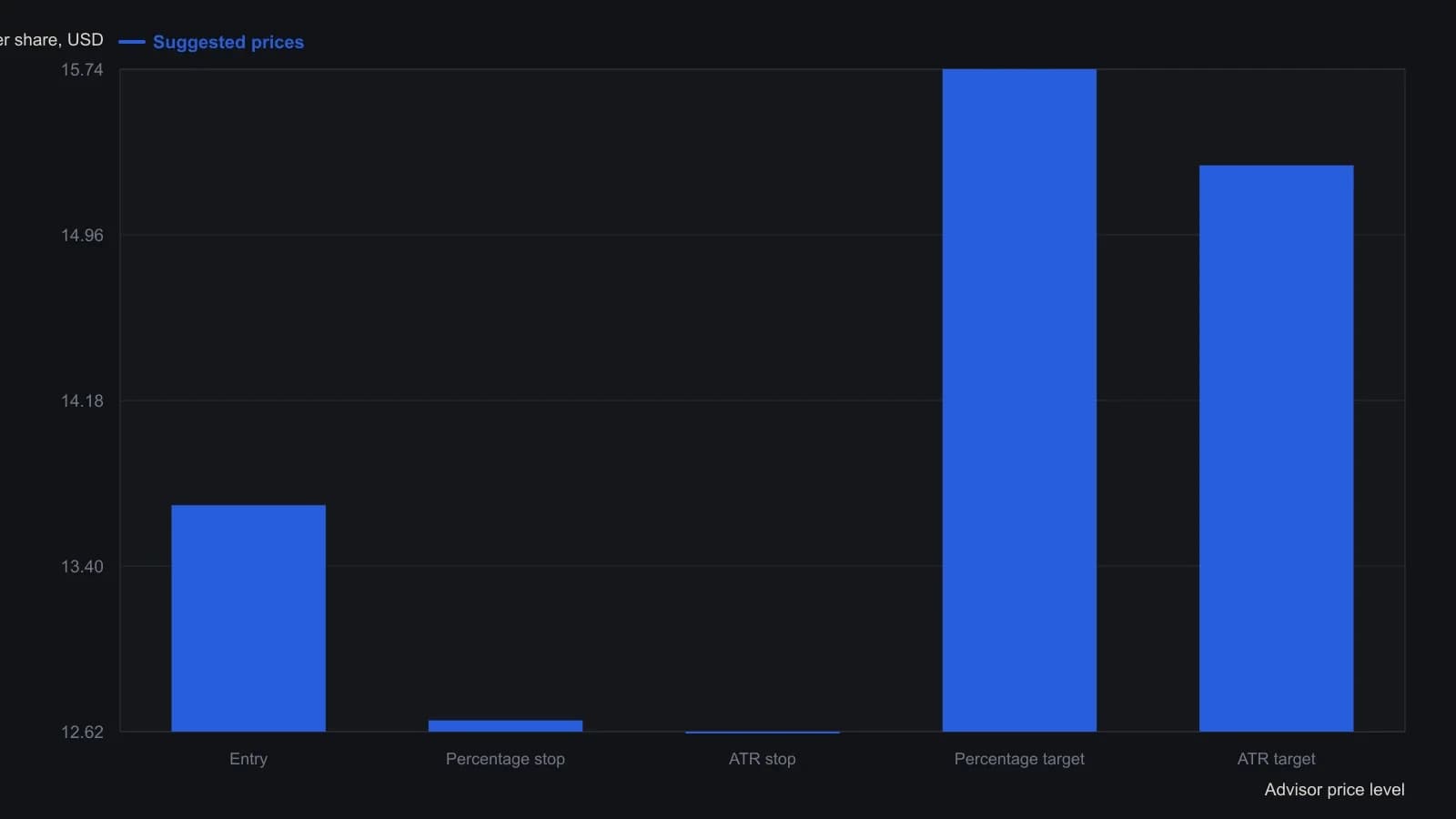
The same commentary voids the idea unless 13.6910 prints that session; otherwise it is treated as a scratch and should not be entered.
All readings on this track · 18 readings
- 1988Constructing a mechanical trend system with independent trailing exits
- 1991Write a staged RSI exit book with trailing stops
- 1993Evaluating filter-trigger trailing exits after breakouts
- 1995Weekly-close breakout entry and trailing exit in Eurodollars
- 1996Evaluating moving-average turn entries and slope exits
- 1997Precommit an equity-risk cap and a profit-retracement exit
- 1998Exit stops before entries
- 1998Exit rules evaluated with a fixed random entry
- 2002Construct the stay-or-flatten decision before entry
- 2006Audit the stop, trail, and risk-reward stack as one procedure
- 2007Building a momentum system with relative strength and trailing exits
- 2013When buy and hold needs a sell rule
- 2013A mechanical trend toolkit that turns screens into one entry-exit procedure
- 2014Is a two-period relative strength index, a channel breakout, and a trailing exit one long-only procedure?
- 2016Trend-aligned option entries and trailing exits
- 2017Monthly three-black candles as a trailing exit
- 2018Evaluating profit-taking and reentry in trend following
- 2020Treat the zigzag threshold as a volatility-scaled construction variable