Methodology
Volume profile vs footprint: different questions, different evidence
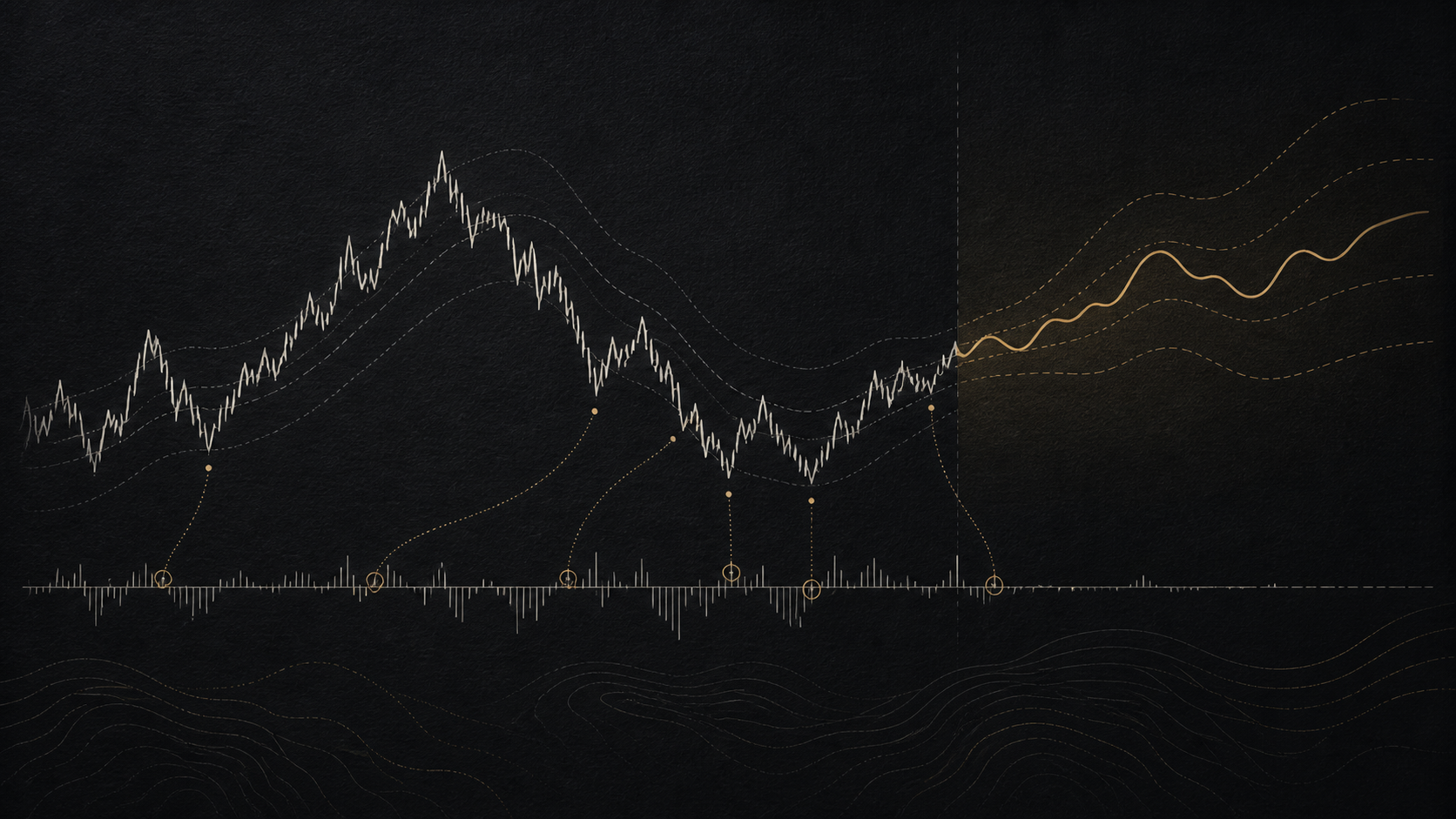
Volume profile asks where volume accumulated across a selected range. Footprint asks how aggressive buyers and sellers traded at each price inside a bar. Profile is useful for locating accepted and rejected areas; footprint is useful for examining the auction when price returns there. Neither turns a level into a forecast.
Reviewed by Andy Bar · Last reviewed 12 August 2026
Profile compresses a range into acceptance
A profile groups volume by price over a session or selected range. Point of control, high-volume nodes and value area describe where trading concentrated. It preserves location and loses the sequence of individual executions that produced the concentration.
Footprint preserves the local auction
Footprint keeps the bar and its price levels, splitting executed volume by the side that crossed the spread. It shows whether a return to a profile level arrived with one-sided aggression, balanced heavy trade or little participation.
Use one for location and one for response
Mark a profile level before price reaches it. At the level, use footprint to observe the response. The plan still needs a confirmation rule and an invalidation price. Agreement between two indicators is not independent proof when both are derived from the same exchange tape.
What this page is based on
Continue the method
Read the method on a live Binance spot chart, with its data limits visible.
Open terminal