Acorns Matches Federal $1,000 Trump Account Investment for Employees' Children
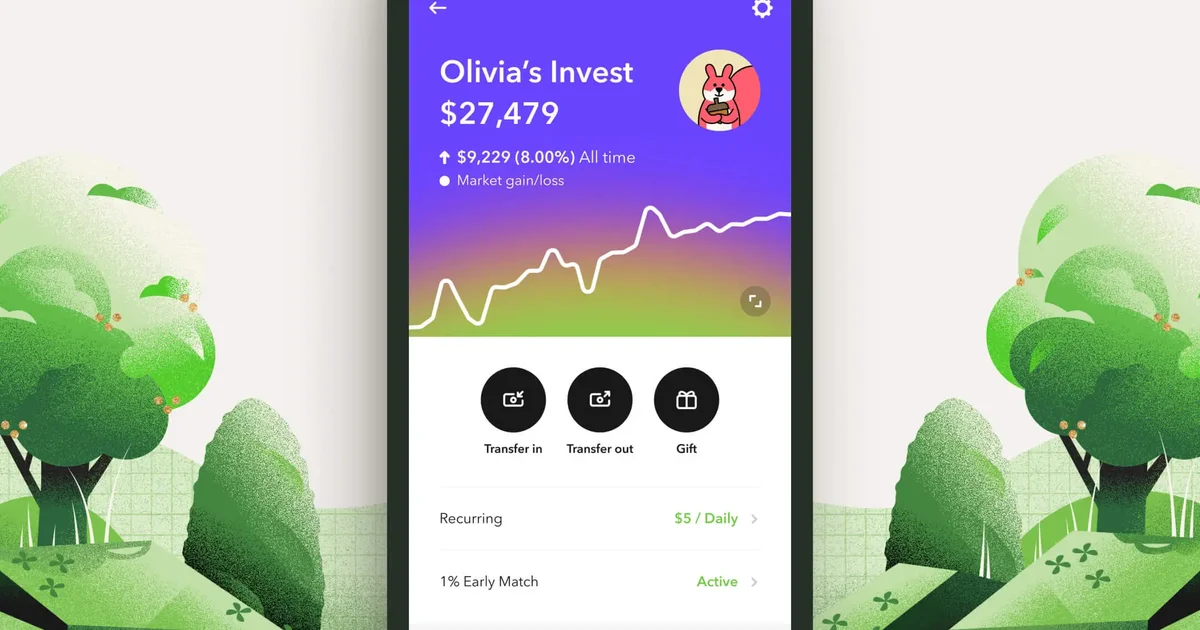
Acorns announces a new employee benefit matching the U.S. government's $1,000 seed contribution for eligible children of employees, providing a total of $2,000 per child to encourage early investing.
Acorns, the financial wellness company, today announced a new employee benefit that will match the U.S. government's $1,000 seed contribution for eligible children of Acorns employees. The federal initiative, called "Trump Accounts," provides a $1,000 investment from the U.S. Treasury for qualifying children born between 2025 and 2028.
By matching this contribution, families of Acorns employees will receive a combined $2,000 to invest for their child from birth. The benefit is designed to give children a head start on compound growth, reinforcing Acorns' core belief that early and consistent investing builds long-term wealth.
"Time is the biggest advantage you can give a child. Starting at birth means even small investments have decades to grow," said Noah Kerner, CEO and Chairman of Acorns. "That's the kind of head start we believe every child deserves."
The announcement builds on Acorns Early, the company's investing and debit card product for families. Through Acorns Early, families can invest for children with built-in financial education and a 1% match on contributions up to $7,000 per year. Since its launch, Acorns Early has helped more than 1.2 million U.S. families invest over $779 million in their children's futures.
Acorns was founded in 2014 and has served over 14 million customers, helping them save and invest more than $27 billion. The company offers products for kids, teens, adults, and parents, and was named one of TIME's "World's Best Brands of 2024."
An illustrative example from the company shows that a $2,000 initial investment at birth, combined with a $5 daily contribution, could grow to approximately $2.58 million by age 60 assuming an 8% annual return. Acorns notes that this is for illustrative purposes only and does not predict actual portfolio performance.
Source: Acorns