2019issue C0924-29
Limited-risk reversal construction
A same-strike risk-reversal is a synthetic-long and still left stock-like cash at risk in the illustrated book. A protective-put on one three-leg-ticket turns it into a limited-risk-reversal, then weekly vertical-call-credit-spreads help finance the later serial.
- A same-strike long call and short put form a risk-reversal that acts as a synthetic-long, including a full loss if the shares go to zero.
- An unmodified risk-reversal does not reduce cash at risk versus owning the shares. A lower-strike protective-put converts it into a limited-risk-reversal whose loss is the reversal debit, the protective-put premium, and the put-strike gap.
- Enter the long call, short put, and protective-put as one three-leg-ticket on a later, liquid serial near 90 days, when the atm-strike put and call carry similar premium.
- Weekly vertical-call-credit-spreads help pay for the protective-put. The package is taken off as a reverse three-leg, by selling the deferred call and leaving the put spread, or at expiration, so the short put is never left unhedged.
The unmodified risk-reversal
A same-strike long call and short put can be assembled as a synthetic-long. That risk-reversal tracks the underlying in both directions, including a full loss if the shares go to zero.
An unmodified risk-reversal does not reduce cash at risk versus owning the shares. The illustrated synthetic-long still left about 37,122 at risk.
Adding a protective-put
Buying a lower-strike protective-put against the short put converts the reversal into a limited-risk-reversal. The loss of that package is the reversal debit, the protective-put premium, and the put-strike gap.
In the illustrated 370/365 construction, that defined loss was 2,604 versus 37,074 to buy 100 shares. The three-leg-ticket plus 500 of put-width margin was shown as 2,104 plus 500 versus the stock outlay.
Boeing 21 June 2019 call and put bids by strike
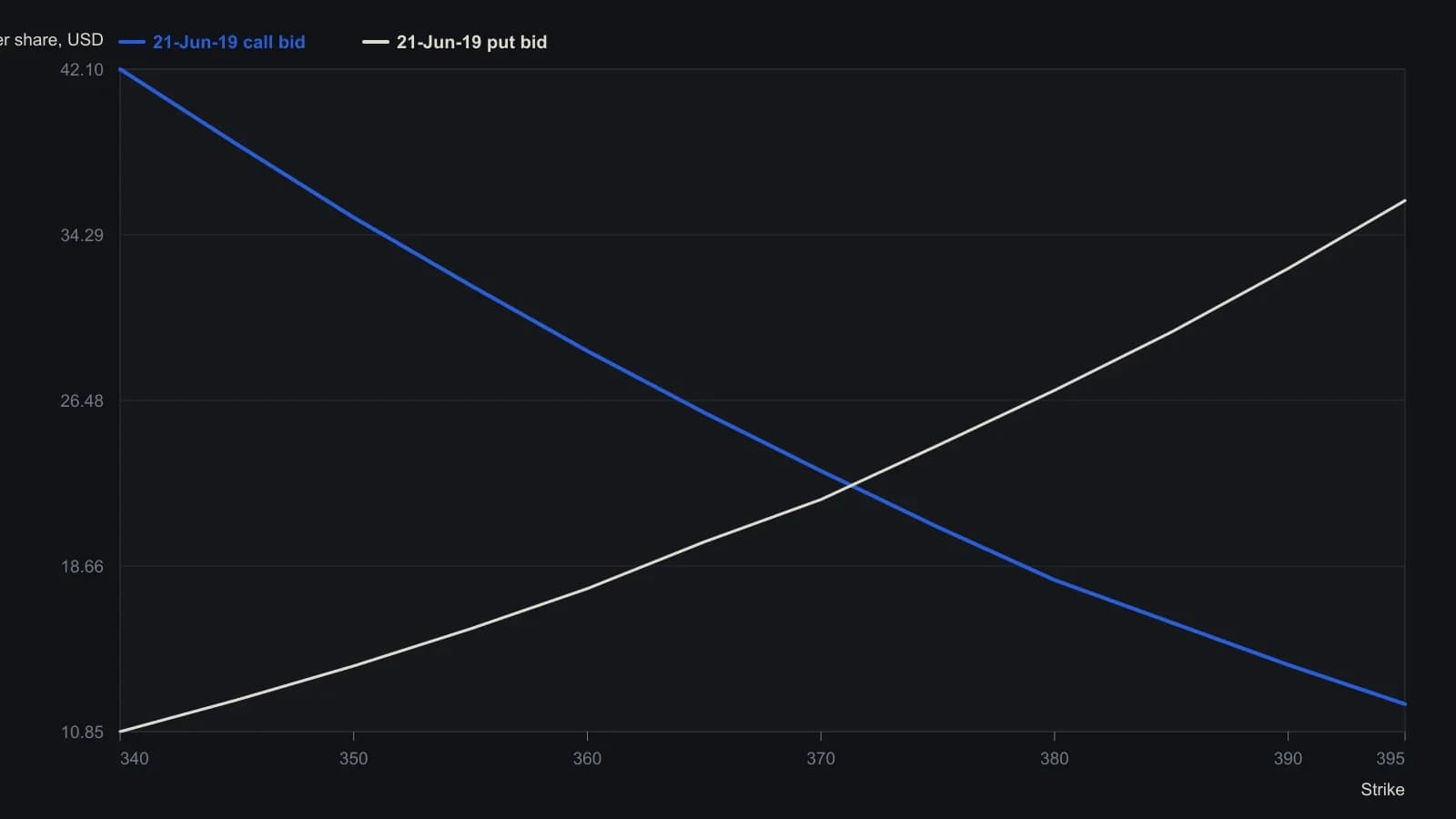
Several in-the-money June call last prints carried a zero-volume condition code and sat well off the live market, so the bid column was used instead of Last. The article’s worked example later quotes marks of 23.32 on the 370 call and 22.10 on the 370 put, a few cents from these bids.
Enter on one later serial
The limited-risk-reversal is initiated as one three-leg-ticket on a later, liquid serial so the short put is never left unhedged.
The later serial is chosen near 90 days when the atm-strike put and call carry similar premium and the chosen expiration has usable liquidity.
Finance the protective-put with weekly spreads
Calendar-spread-options use that later-dated three-leg package together with nearer-dated weekly vertical-call-credit-spreads. Those weekly spreads are sold against the later package to help pay for the protective-put, raising weekly spread margin while aiming to lower the net cash outlay.
After the first weekly credit spread, the illustrated book was 2,004 cash plus 750 of spread margin, or 2,754 total. That book was described as about 13.4-to-1 leverage and typically 10% to 20% of buying the shares.
Close without reopening unlimited risk
The package can be closed as a reverse three-leg, by selling the deferred call and leaving the put spread, or at expiration by selling the call and letting or closing the put spread. Weekly vertical-call-credit-spreads are closed, expired, or rolled.
The stated construction goal is defined downside with open upside and a much smaller margin than stock. Serial calendar overlays mean the package usually will not capture a full one-for-one upside move.
All readings on this track · 21 readings
- 1994Competing-bid calendar spreads and implied volatility
- 2001Calendar spreads as range overlays with wing repairs
- 2002Covered-call premium budgets and calendar-style rolls
- 2002Calendar-spread construction from time decay and implied volatility
- 2003Calendar ratio backspread construction for range and breakout regimes
- 2005Read the implied-volatility regime before calendar-spread assignment
- 2005Constructing calendars and straddles around implied volatility
- 2005Short option coverage through calendars, rolls, and expiration
- 2006Calendar spread expiration, assignment and time skew
- 2008The two clocks that close a calendar or a stock-plus-put
- 2010Cheap back-month implied volatility is a regime question, not a shopping rule
- 2010Calendar-spread assignment as a volatility regime shift
- 2010Uncapped collar overlays and earnings-week short calendars
- 2011Sequencing verticals, straddles, and calendars as construction tests
- 2012Executing conversion and ratio calendar option packages
- 2015Near-expiry options on new-crop grain futures
- 2018Calendar spreads as range and volatility regime trades
- 2019A directional put calendar after a failed resistance breakout
- 2019Sizing short-option risk with calendar puts
- 2019Limited-risk reversal construction
- 2020Covered-call writing versus a calendar call diagonal