2006issue C031-5
Layered day-session automation from brackets to rules
Day-session automation can be stacked as replaceable order actions. Conditional tickets, front-end software, and a full mechanical procedure each turn live work into stated entry, scale, stop, or stand-aside rules, while a human still has to disable or repair the stack after a bad print or a lost connection.
- Day-session automation can be built in layers: broker-side conditional orders, software that automates selected legs such as exits, or a full mechanical procedure that covers both entry and exit.
- Grouped tickets such as order-cancels-order and order-sends-order can rest a range breakout or release a bracket-exit after the entry fills, but a partial fill still has to be resized by hand.
- Front-end automation can place and resize related working orders from a price ladder without writing code, yet it depends on a running program and a live datafeed.
- A mechanical trading system encodes rule-based entries and exits as one testable procedure, and still needs a human to disable or repair it when prints are wrong or the data connection is lost.
Build the session in replaceable layers
Day-session automation can be constructed in layers. The first layer is broker-side conditional orders. The next is software that automates selected legs such as exits. The last is a full mechanical procedure that covers both entry and exit.
A long that is split across two profit targets, with a protective stop later moved to the original entry after the first target fills, can require seven discrete actions: one buy, two sell limits, two sell stops, and two cancellations.
State each ticket as a condition or a group
A conditional order is a working instruction that is sent or withdrawn only after a stated fill or price condition is met. An order-cancels-order group withdraws the remaining members as soon as one member fills. It can admit a range breakout by resting opposing long and short orders, or exit an open position with a simultaneous stop and limit so the unfilled side is withdrawn when one side fills.
That paired protective stop and profit-limit is a bracket-exit. An order-sends-order instruction releases follow-on working orders only after the parent entry fills. It can release a protective stop and target bracket after the entry fills, and it can be joined to an order-cancels-order group so those exit legs are placed automatically at initiation.
Conditional orders still need manual resizing after a partial fill. Composing them by hand can be too slow when prices are moving quickly.
Let front-end software manage related working orders
Front-end automation is order-management software on a direct-access connection. It can reduce placement to a single click on a price ladder, then recalculate related working orders as size changes, including multi-target, trailing-stop, and add-on constructions that do not require writing code.
Front-end exit logic depends on a continuously running program and a live datafeed. A computer or connectivity failure can leave an open position without its planned protective orders.
Encode entry, exit, and stand-aside as one procedure
A mechanical trading system is a complete pre-specified procedure that turns rule inputs and market state into entry, exit, and abstention signals without case-by-case discretion. A fully mechanical system encodes both rule-based entries and exits, from simple indicator conditions to custom-programmed strategies, so the same procedure can be attached to a chart and sent to the market automatically. A rule-based entry is an objective admission test that fires only when stated market conditions and execution constraints are met.
Because a mechanical system only reacts to the data it receives, incorrect prints or a lost data connection still require a human to disable or repair the procedure.
System construction that relies on historical tests treats entry, exit, and stand-aside decisions as one objective procedure. That is system optimization: evaluating and refining those rules together against historical market state so the procedure is one testable unit. Discretionary traders can still attach automated order-management layers, so the two styles can overlap.
Automated strategy P&L on December 2005 e-mini Russell 2000
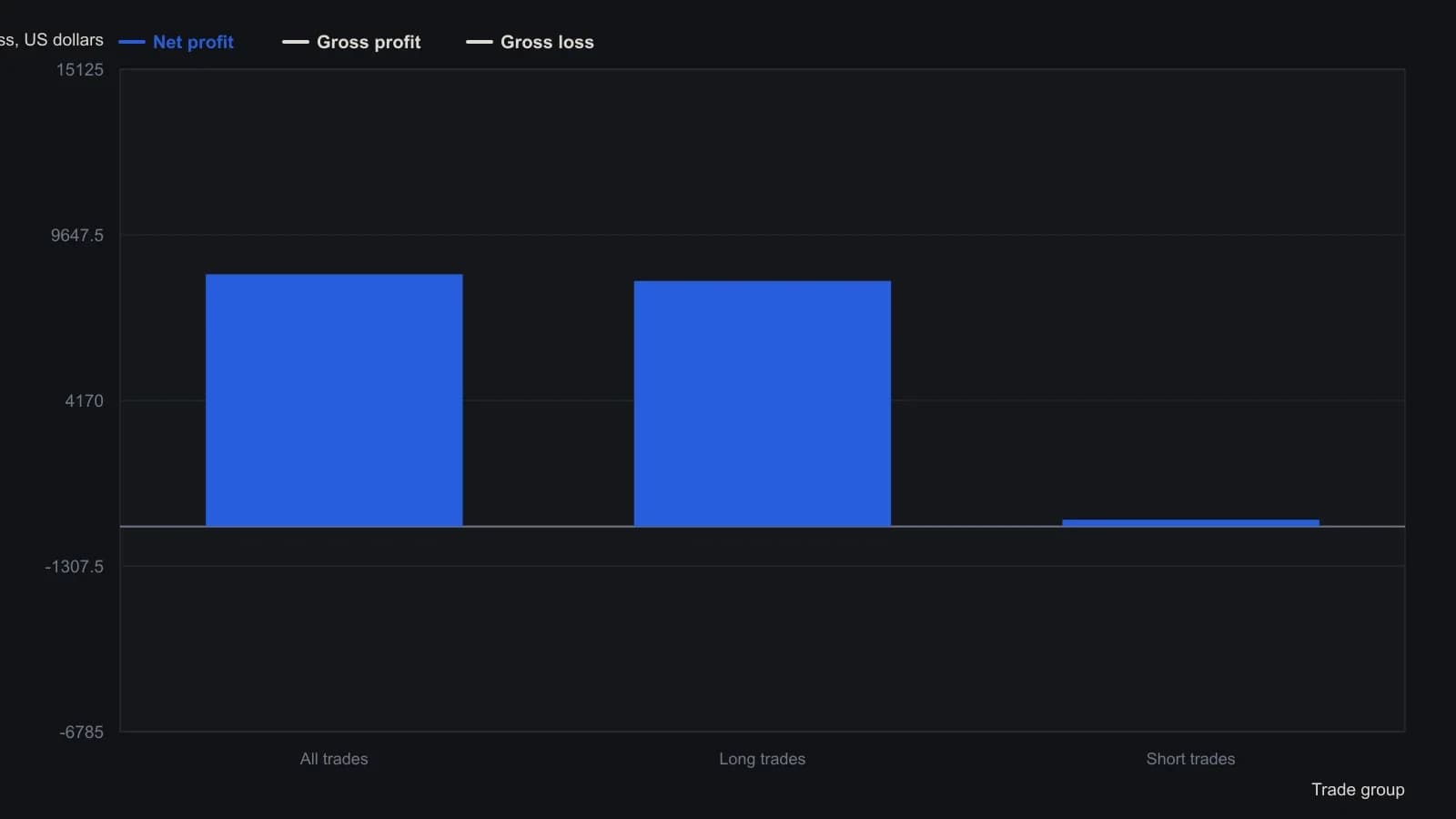
The published test used 144-tick bars on ER2Z05 and reported zero open-position P&L at the end of the window. Profit factor is omitted here because it is a ratio, not a dollar amount.
All readings on this track · 23 readings
- 1984Evaluating mechanical systems beyond net profit
- 1987Mechanical systems need more than pretty charts
- 1987Evaluating silver moving averages and RSI by scoring rule
- 1988Simple systems over optimized complexity
- 1988Cycle rule inputs until the parameter search stops
- 1990Split-sample tests for stochastic parameter grids
- 1993Four-subsystem trading system construction
- 1993Randomized price paths for stock system parameters
- 1994Mechanical timing with out-of-sample and filter checks
- 1995Evaluating asymmetric percent-reversal trading rules
- 1996Evaluating a daily volume-strength and new-high new-low timing procedure
- 1997Rule-based intraday system design with genetic search
- 1997Evolving three-rule systems with genetic templates
- 1997Audit the holdout and the exposure before the fitted entries
- 2001Inner weights are part of the candlestick signal
- 2003Mechanical short-term rules for news-sensitive rallies
- 2004Band construction as a testable trading procedure
- 2006Layered day-session automation from brackets to rules
- 2006Why mechanical rules must be retuned per security
- 2006A linear-regression next-bar forecast needs a searchable cutoff
- 2015Construct if-then rules, then backtest and optimize
- 2015Mechanical system design as a critique of discretion
- 2025Joint channel design with a trend filter and stop-loss orders