1995issue C071-10
Evaluating asymmetric percent-reversal trading rules
Treat a mechanical long-short percent-reversal procedure as one test object. Pair the rule-based entry with its matching exit, keep a no-trade band for small swings, and use system optimization only to place that procedure beside moving-average and channel rules on the same sample.
- Treat the percent-reversal long, the matching short, and the no-trade band for small swings as one mechanical trading system.
- An asymmetric percent filter may set unequal up-move and down-move thresholds so each position ignores the smaller fluctuations while it is held.
- Use system optimization only to place this procedure beside moving-average and channel-breakout rules on a comparable in-sample footing.
- An in-sample fit from the scored window leaves later results suspect until an out-of-sample check is done.
The procedure as one test object
A mechanical trading system is a single procedure that maps rule inputs, market state, and execution constraints to a long, short, or flat signal over the system holding period. The archive percent-reversal workflow is that kind of object. A rule-based entry opens a long or a short when price has moved a stated percentage from the extreme recorded while the opposite position was held, and the matching percentage move in the other direction is the exit that flips the position.
The evaluation also kept an explicit no-trade band. Small swings do not generate a new signal. Entry, exit, and abstention are tested together.
How the percent-reversal signals are defined
The mechanical percent-reversal procedure goes long after a specified upward percentage move from the lowest low recorded while short, then stays long until a specified downward percentage move from the highest price recorded while long triggers a short. The comparison used closing prices only to generate those signals.
The up-move and down-move percentage thresholds may be set equal or unequal so advances and declines can be filtered differently. That design is an asymmetric percent filter. While long, moves smaller than the up-threshold are ignored. While short, moves smaller than the down-threshold are ignored.
Thresholds may be chosen by observation, trial and error, or optimization, but values fitted on a past window are not assumed to hold later.
Placing the rules beside other systems
The evaluation compared those rules with a two-parameter moving-average crossover system and two channel-breakout systems on weekly Standard & Poor's 500 data. The moving-average comparison required both a lookback on weekly closes and a crossover buffer intended to reduce whipsaws. One channel-breakout system used a single lookback for the highest and lowest close plus a buffer. The other used separate buy and sell lookbacks on highs and lows plus a buffer.
Comparison parameters were obtained by system optimization so each system's best curve-fitted result could be placed side by side, with an explicit warning that those fitted values should not be used without further out-of-sample testing. A later comparison optimized the same percent-reversal rules on daily Dow Jones Industrial Average closes and treated full-sample fitted parameters as making later results suspect.
UD% weekly S&P 500: net and gross P&L by side
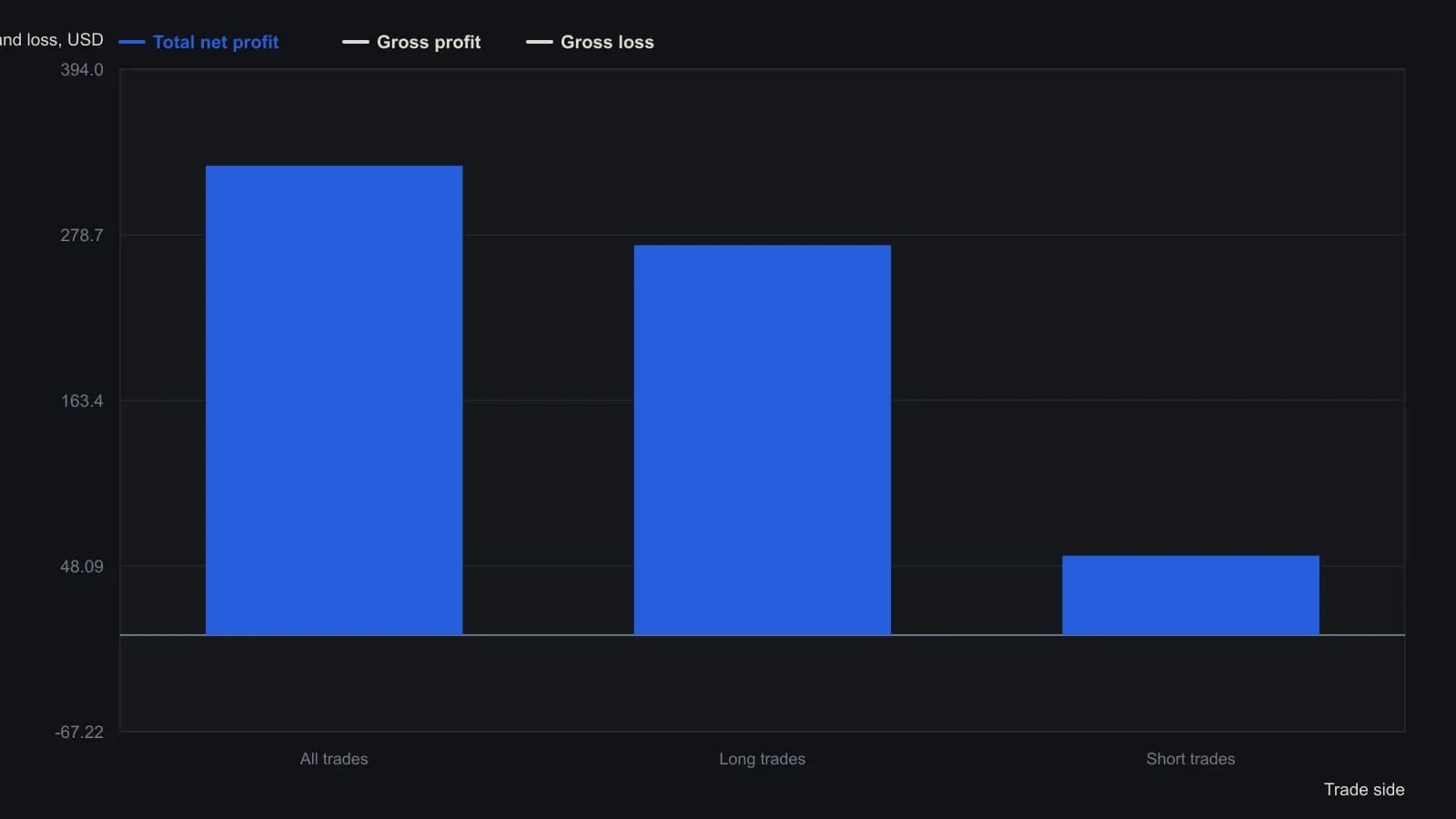
Meyers chose the up and down percent filters by optimizing over this entire sample and warns that those fitted values are not a live-money setup.
Editorial: evaluation discipline, not a parameter search
Editorial: treat the mechanical long-short procedure as one test object. Pair the rule-based entry with its matching exit, keep the no-trade band for small swings, and use system optimization only to put that procedure beside the moving-average and channel-breakout rules on the same sample. The in-sample fit exists so the comparison is even. It is not a set of values to carry forward. An out-of-sample check on data that were not used to choose the parameters is what keeps the exercise from becoming a search for a winning parameter set.
All readings on this track · 23 readings
- 1984Evaluating mechanical systems beyond net profit
- 1987Mechanical systems need more than pretty charts
- 1987Evaluating silver moving averages and RSI by scoring rule
- 1988Simple systems over optimized complexity
- 1988Cycle rule inputs until the parameter search stops
- 1990Split-sample tests for stochastic parameter grids
- 1993Four-subsystem trading system construction
- 1993Randomized price paths for stock system parameters
- 1994Mechanical timing with out-of-sample and filter checks
- 1995Evaluating asymmetric percent-reversal trading rules
- 1996Evaluating a daily volume-strength and new-high new-low timing procedure
- 1997Rule-based intraday system design with genetic search
- 1997Evolving three-rule systems with genetic templates
- 1997Audit the holdout and the exposure before the fitted entries
- 2001Inner weights are part of the candlestick signal
- 2003Mechanical short-term rules for news-sensitive rallies
- 2004Band construction as a testable trading procedure
- 2006Layered day-session automation from brackets to rules
- 2006Why mechanical rules must be retuned per security
- 2006A linear-regression next-bar forecast needs a searchable cutoff
- 2015Construct if-then rules, then backtest and optimize
- 2015Mechanical system design as a critique of discretion
- 2025Joint channel design with a trend filter and stop-loss orders