2015issue C1028-31
Construct a name-specific fear overlay before a short strangle
A name-specific implied-volatility overlay can be built from session ranges so an options-strangle is constructed only when that name's fear reading diverges from the broad market, rather than when a generic volatility index is quiet.
- A name-specific implied-volatility reading is built from the distance between the highest close over the prior 22 sessions and today's low, then scaled to a 0-100 range.
- Index implied volatility is silent on a single name that is becoming fearful while the broad market is still making new highs.
- A small gap between the session low and the close is treated as elevated short-term fear because holders were unwilling to carry the position overnight.
- The name-specific fear overlay is paired with a minimum-income screen so an options-strangle is constructed only when the local volatility regime and the carry requirement both clear.
What the overlay is for
TradersWeek editorial note: the aim is to teach construction of a single-name overlay so a short-premium strangle is built only when that name's fear reading diverges from the broad market. The archive itself describes only the historical workflow below.
An inverted broad-market volatility series tracks the path of an S&P 500 exchange-traded fund almost one-for-one on a price chart. Index implied volatility is silent on a single name that is becoming fearful while the broad market is still making new highs.
CBOE VIX from the October 2014 break into spring 2015
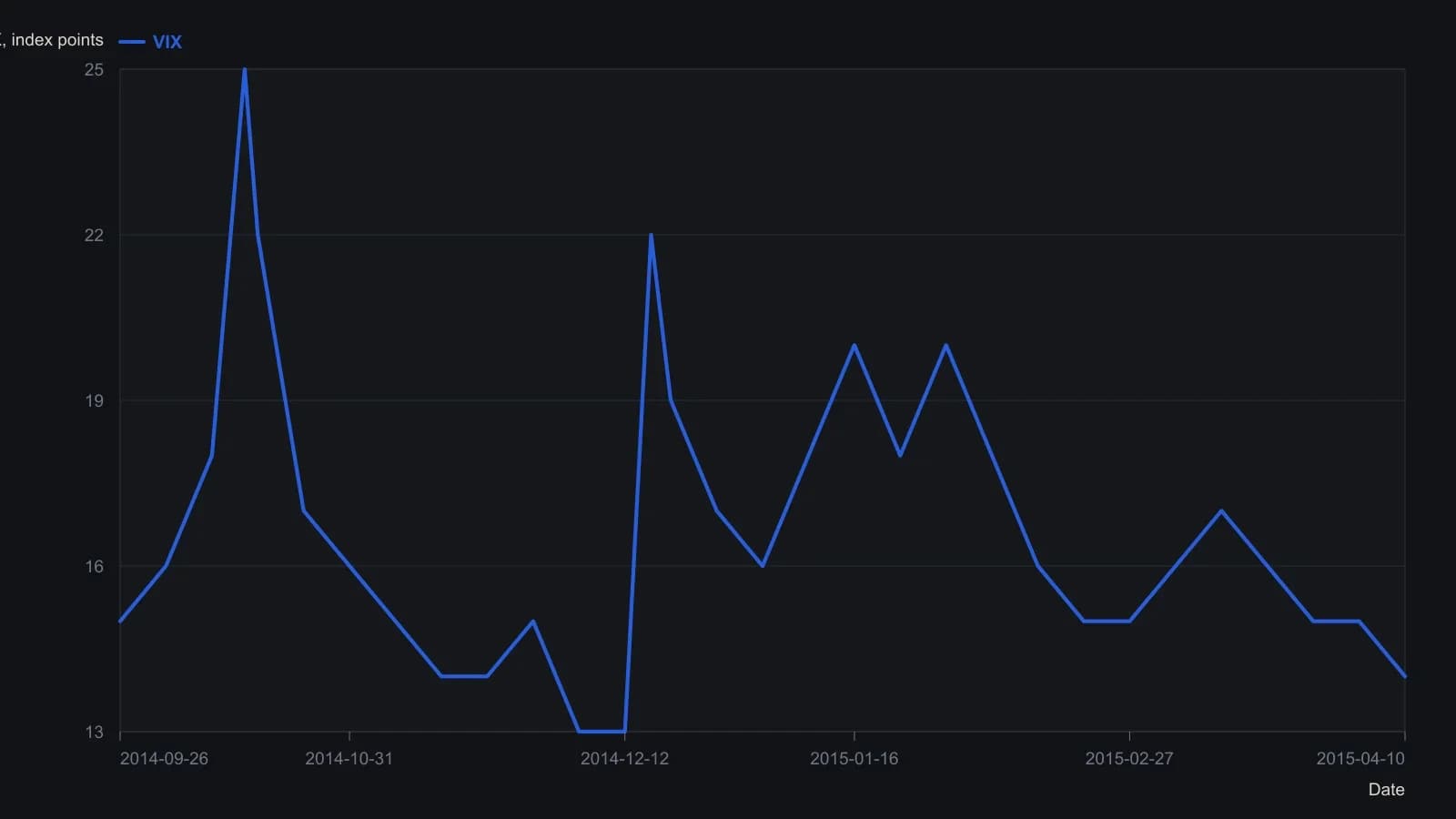
Figure 1 also plots SPY and a flipped copy of VIX; those panes do not share VIX’s scale, so only VIX is carried. Dates are interpolated from month ticks—the source does not print daily labels. Williams’ VIX-fix formula is a separate 22-day low-versus-highest-close stochastic, not this inverted VIX line.
How the implied-volatility reading is constructed
Implied-volatility, in this workflow, is a name-specific fear reading built from the gap between the recent highest close and today's low. It is used to classify a weeks-to-months volatility regime instead of relying on an index-only premium measure.
A name-specific implied-volatility reading can be constructed from the distance between the highest close over the prior 22 sessions and today's low, then scaled to a 0-100 range. That rescaling is the vix-fix: a stochastic-style rescaling of the low-to-highest-close relationship that extends an index fear concept to any listed security.
The same low-to-highest-close construction can be computed on any listed stock, exchange-traded fund, or other security, not only on S&P 500 option premiums.
How the session range marks overnight close risk
Overnight-close-risk is the inability to exit after the session ends, which is why the close and its distance from the session low are treated as the fear signal rather than intraday ticks.
A small gap between the session low and the close is treated as elevated short-term fear because holders were unwilling to carry the position overnight. A wide open-to-close range plus a close near the high is presented as confirmation that buyers were still bidding into the overnight hold.
How the options-strangle is gated
An options-strangle is a short out-of-the-money call and put overlay placed only after the name-specific fear reading has reset, so premium collection sits inside a diversified or regime-aware portfolio rather than as a standalone directional bet.
The name-specific fear overlay is intended to be paired with a minimum-income screen so a strangle is constructed only when the local volatility regime and carry requirement both clear.
All readings on this track · 15 readings
- 1987Write the exclusion zone, then choose the structure
- 2001Straddles, strangles, and calendars in an index portfolio context
- 2006Event-week straddle and strangle construction with residual delta
- 2007Straddle versus strangle construction and a debit-spread cash audit
- 2010Critiquing event-priced straddles and expiration pin-risk
- 2010Placing an options strangle in the 2010 market regime
- 2010Short strangle construction from range, volatility and premium
- 2011Iron butterfly as packaged straddle and strangle
- 2012Calm as one testable trading procedure
- 2014Long-strangle premium hurdle and event volatility
- 2014Constructing short strangles as range income in futures options
- 2014Paired stop futures strangles fail on false breakouts
- 2015Construct a name-specific fear overlay before a short strangle
- 2016Financed protective puts, upside caps, and hedge timing
- 2017Hours, capital gates, and strangle margin on emini S&P options