1988issue C091-7
Opening range breakout, stretch preference, and timed stops
The two-sided opening-range procedure places a buy stop a computed stretch above the opening-range high and a sell stop the same stretch below the opening-range low. The first fill is the position, the unfilled stop is protection, and preference or a session clock can cancel, tighten, or trail that sheet.
- The two-sided opening-range breakout places a buy stop a stretch above the opening-range high and a sell stop the same stretch below the opening-range low; the first fill is the position and the unfilled stop is the protective stop.
- Stretch is the average, over the prior 10 sessions, of each day's distance from the open to the nearer extreme of that session.
- When a directional preference is in force, only the preferred-side stop is entered; if price first reaches the stretch on the opposite side, the resting order is cancelled and no trade is taken.
- A fill in the first 10 minutes is the design case; after entry the protective stop is generally moved to break-even within one hour, leftover size can sit behind that bound, and a trailing stop is an additional bound on remaining exposure.
A two-sided pair at the open
The two-sided opening-range procedure places a buy stop a computed stretch above the opening-range high and a sell stop the same stretch below the opening-range low. The first fill is the position and the unfilled stop becomes the protective stop.
How stretch is measured
Stretch is the average, over the prior 10 sessions, of each day's distance from the open to the nearer extreme of that session. Both opening-range stops are offset by that average.
Preferred-side orders and no-trade
When a directional preference is in force, only the preferred-side stop is entered. If price first reaches the stretch on the opposite side, the resting order is cancelled and no trade is taken.
Designated setups and the hook day
The two-sided procedure is specified after an inside day whose range is narrower than the prior four sessions and after any day whose range is smaller than the prior six sessions.
A hook day is defined as a session that opens beyond the prior day's high or low, then reverses the prior close, while posting a smaller daily range than the prior session.
March 1988 copper into and after the December high
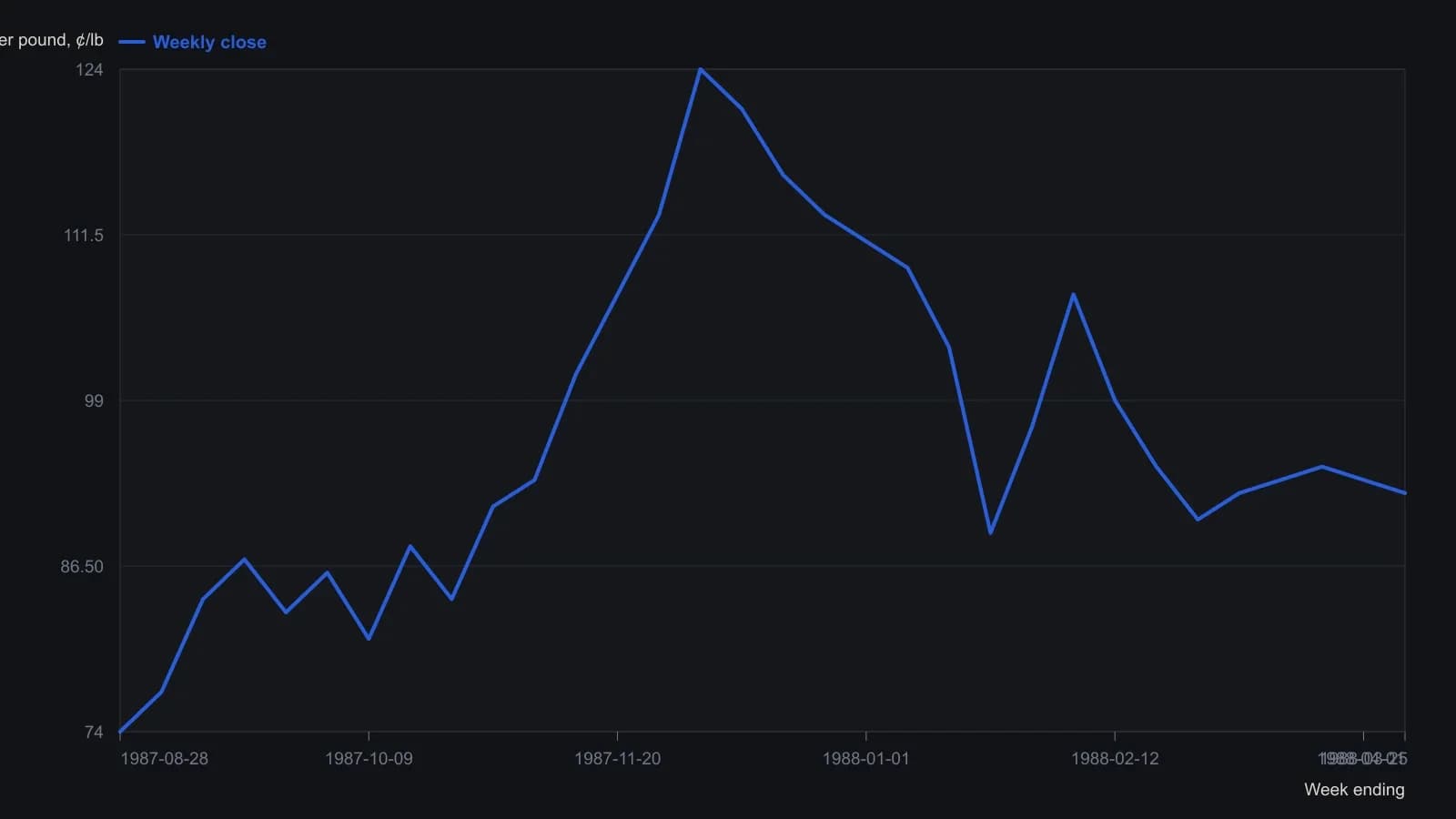
Closes were picked off the magazine raster to the nearest cent. The 127.80 high is the figure printed on the sheet, not a weekly close. Stretch on the print is the prior 10-session mean of the open to the nearest extreme (up average 1.08, down average 1.46 as of 25 February 1988).
Session clocks after the fill
Session timing is part of the rule set. A fill in the first 10 minutes is the design case. A large move in the first 15 minutes is the cue to move the protective stop to break-even promptly. Later fills call for smaller size.
After entry, the protective stop is generally moved to break-even within one hour. Markets described as more persistent are given a shorter clock, with an equity-index example of five to 10 minutes.
The first side of the stretch that trades is used as a same-session bias reading for the next two to three hours.
Holding window and leftover size
The intended holding window is a two- to three-session run. That objective is treated as valid only when a substantial first-session profit has already been realized.
Multiple units allow a partial exit so leftover size can sit behind a break-even stop. A trailing stop is specified as an additional bound on remaining exposure.
All readings on this track · 9 readings
- 1986The stop, the size, and the acceptable loss as one pre-entry gate
- 1988Opening range breakout, stretch preference, and timed stops
- 2002Six-week reversal candles, next-week entry, and a break-even stop
- 2013Hard stops and small bets to keep a portfolio alive
- 2014Bounding losses with stops, leverage and break-even exits
- 2016Process-first swing trading and the break-even stop
- 2018Credit-spread risk budget beyond support
- 2019Break-even stops require a new invalidation
- 2020Momentum scale-in and midpoint break-even stops