1989issue C011-8
Rank rotation opens the names; pairing keeps the hedge
A common-stock hedge places similar dollars long and short so results depend on relative performance. Rank rotation opens the names, while equal-dollar pairing, a price-floor filter, and scheduled rebalancing keep the sleeve from drifting into a one-way market bet.
- Similar dollar amounts on each side reduce broad-market exposure so results depend on some names outperforming others.
- Rank rotation opens longs only at initial ratings of +100 or higher and shorts only at -100 or lower, then normally closes a name that crosses zero.
- A price-floor filter excludes names under 3 dollars so brokers still grant full margin credit and posted capital stays at work on both sides.
- Hedge drift can leave the book long-heavy after a favorable stretch, so the construction required periodic rebalancing to keep the sleeve from becoming a one-way long book.
A book built to depend on relative performance
A common-stock hedge can be built by placing similar dollar amounts in long and short positions so that broad-market exposure is reduced and results depend on some names outperforming others. Beta hedging, in this construction, means offsetting long and short stock weights so the book is less sensitive to the broad market regime and more sensitive to relative performance.
Percent return by name in the 1987–88 hedge book
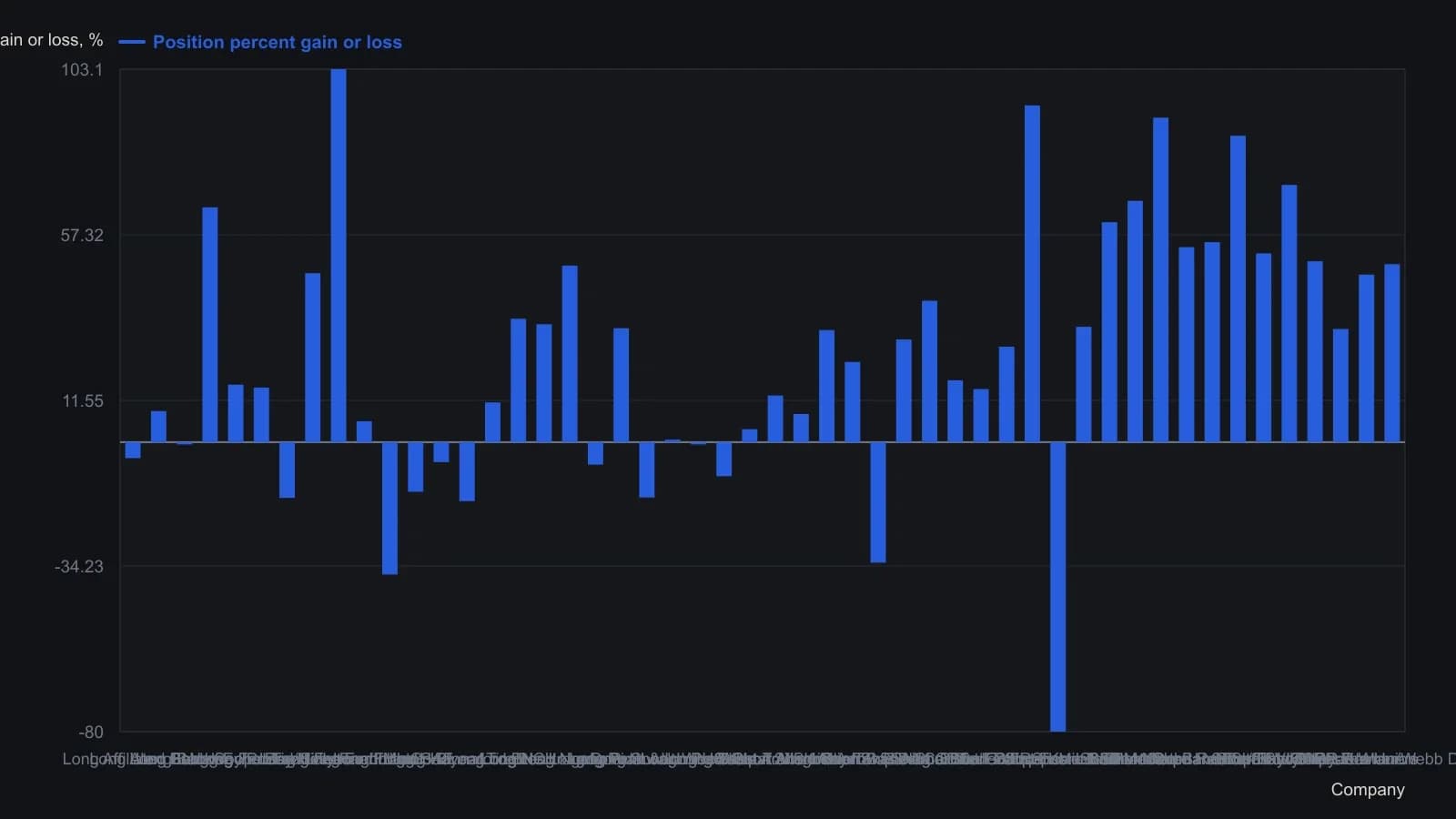
Each slot was sized near $4,000. Names under $3 were excluded. Six rows name a successor after a takeover or delisting. Printed percentages exclude dividends and commissions. Ford’s cramped percent column was checked against the printed start and end dollar values (3,993 to 4,224).
The operating checklist
The documented operating checklist is a margin account for handling shorts, enough capital to diversify across 10 to 25 names on each side, a selection method that flags both prospective winners and losers, and a short weekly review.
One year-long construction used 25 long and 25 short names, replaced only six issues after takeovers or delistings, and funded roughly equal 4000-dollar slots from a 100000-dollar margin account while holding short-sale cash as collateral.
Rank rotation as the entry and exit gate
Rank rotation is a selection procedure that ranks names from strongest to weakest prospects and uses those ranks as one testable rule for entries, exits, replacements, and abstention. Rank rotation was specified as opening longs only at initial ratings of +100 or higher and shorts only at -100 or lower on a +300 to -300 scale, then normally closing any name that crossed zero.
Equal-dollar pairing and the price-floor filter
Equal-dollar pairing allocates similar dollar amounts to each long and each short name so a few positions cannot dominate the hedge.
Names priced under 3 dollars were excluded because brokers often deny full margin credit below that level, which would leave less of the posted capital working inside the hedge.
Hedge drift and rebalancing
After a favorable stretch the illustrated book held 1.8 times as much value in longs as in shorts, so the construction required periodic rebalancing, adding to longs after market declines and to shorts after advances, to keep the sleeve from drifting into a one-way long book. Hedge drift is the tendency of a successful long-short book to become long-heavy as winners rise and shorts fall unless weights are rebalanced.
Seasonal abstention in midwinter
A recurring mid-December through mid-February soft patch was attributed to year-end tax-loss selling and a January lift in lower-quality names, so new books started near year-end were told to wait until February and existing books could temporarily cut short exposure. Seasonal abstention means standing aside on new books, or cutting short exposure, during that recurring midwinter window when lower-quality names often bounce.
Optional construction refinements
Optional construction refinements included moving-average stop-losses, round-lot sizing in larger accounts, and avoiding short names that pay dividends because the short seller owes those payments.
What remains once the book is paired
Once paired weights remove most market-timing burden, the remaining procedure is a frequent ranking of both high- and low-prospect names, including the option to take long candidates from one ranking source and short candidates from another.
All readings on this track · 13 readings
- 1989Rank rotation opens the names; pairing keeps the hedge
- 1991Evaluating allocation sleeves against an index proxy
- 1991Construct an equity book by weakening residual co-movement, then setting a market slope
- 1992Sizing index futures to retarget portfolio beta
- 1992Portfolio beta overlays with index futures and puts
- 1997Construct a trailing stop from beta and price
- 1998An offense-defense matrix for regime-aware stock selection
- 1998Constructing a stock-book duration proxy from beta and bond markets
- 2007An index put as deductible insurance for an active stock book
- 2010Constructing option overlays for beta-adjusted portfolios
- 2014Long-only relative value with an index hedge and a crisis stop
- 2017Hedging a rising book with beta and ATR
- 2019Sizing micro index futures overlays for cash equity books