2020issue C0947
Comfort, not theory, keeps mechanical rules in use
A mechanical-trading-system may start from an underlying-theory or from rules with no story. The follow-through problem is whether entry, exit and abstention signals stay testable as one procedure, and whether a trader can still take them through later drawdowns.
- Both a pre-stated underlying-theory and a story-free rule set are treated as acceptable ways to specify a mechanical-trading-system.
- An underlying-theory belongs in idea-generation before testing. An after-the-fact-explanation is treated as easy to construct and of little use for real-time rule decisions.
- Drawdown-abandonment is stopping a still-intact procedure because discomfort, not a broken rule set, ends execution.
- After a historically favorable test, later live success or failure can arrive with a theory present or with no theory at all.
Two acceptable design paths
A mechanical-trading-system is a single testable procedure that turns rule inputs, market state and execution constraints into entry, exit or abstention signals over the system holding period. That procedure may be specified from an underlying-theory, a market story stated before testing and used to justify why a rule should exist. It may also be specified from rules that have no such story. Both design paths are treated as acceptable.
Idea-generation is the pre-test step that converts a theory or an unexplained pattern into rules that can be evaluated together. Any underlying-theory used in design is supposed to be stated before testing, not invented after results are already known.
Stories that arrive too late
An after-the-fact-explanation is a reason invented after a price move that was not part of the original testable procedure. After-the-fact market narratives are treated as easy to construct and of little use for real-time rule decisions.
If a trader already relies on fundamental criteria, those criteria can stay inside idea-generation because they support willingness to follow the later procedure.
30-minute WTI crude oil on the Sunday-night short example
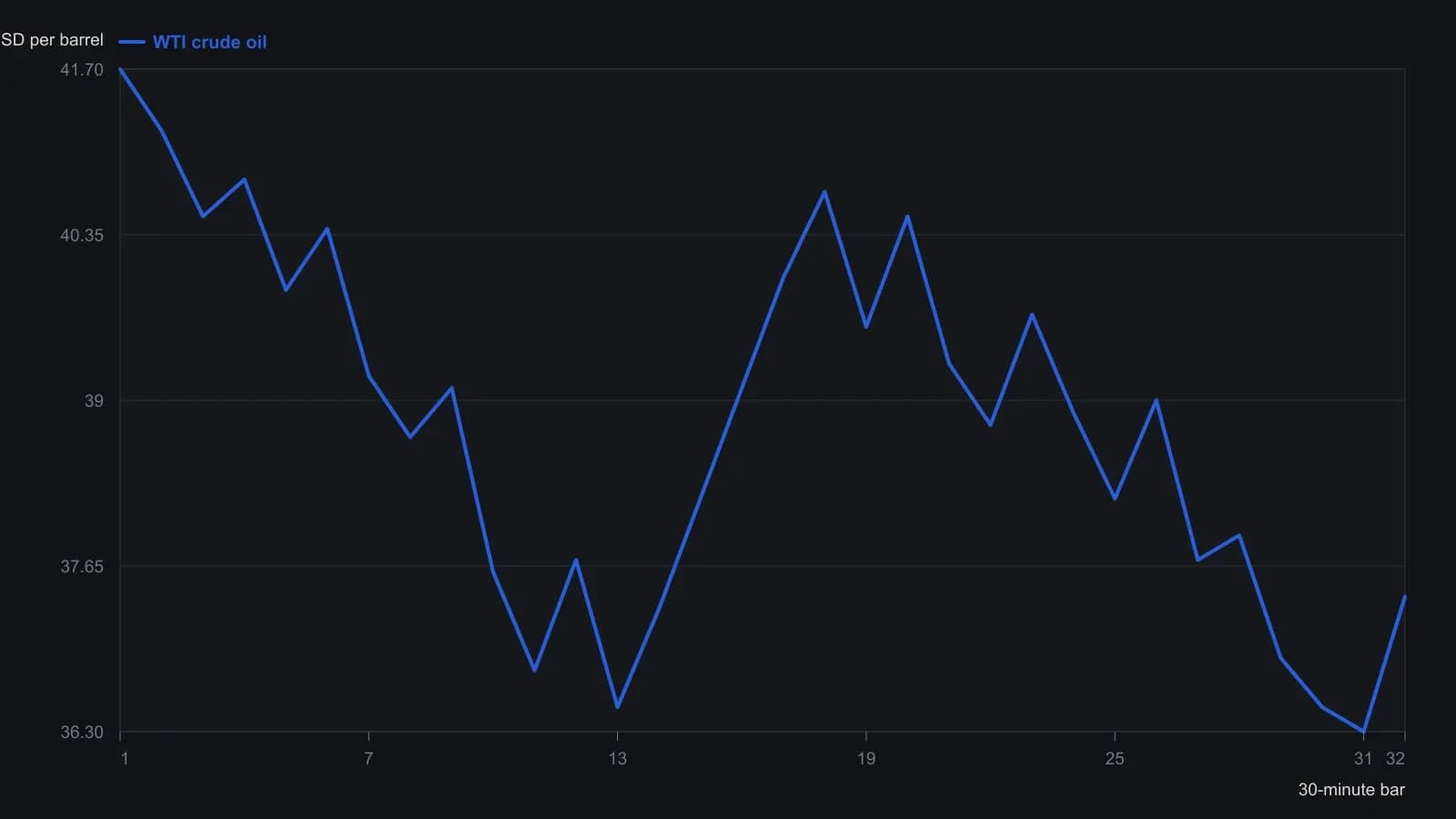
Closes were read by eye from 30-minute candlesticks on a $1 price grid, so values are approximate to about 0.2 dollars. Session timestamps on the x-axis were not readable; x is bar order from left to right in the printed window, not calendar time.
Comfort is part of staying with the signals
A trading-psychology-process is the set of comfort and confidence checks that decide whether a trader can keep following that same signal procedure when results turn adverse. Comfort with the traded rules is identified as a neglected part of algorithmic decision-making and as especially relevant during long drawdowns.
Insufficient comfort with a mechanical procedure is described as a reason a trader may stop using it during a drawdown even if the procedure itself has not failed. That stop is drawdown-abandonment: stopping a still-intact procedure because discomfort, not a broken rule set, ends execution.
What a favorable test still leaves open
Four combinations are listed after a historically favorable test: a theory present or absent, each paired with later live success or later live failure. A pre-test theory can fail to yield a usable rule on one hypothesized side of a move while still supporting a rule on the other side.
Ideas that initially appear implausible can still become usable procedures, and favored theories can fail once tested.
Editorial reading of the design problem
Editorial note: a usable mechanical-trading-system is still unfinished if the trader cannot stay with it. The open design step is whether any underlying-theory is needed for comfort, not whether an after-the-fact-explanation can be written later.
All readings on this track · 22 readings
- 1985Treat a shared mechanical printout as a public script
- 1988Pessimistic margin ranking for mechanical systems
- 1991From a differenced-average sketch to coded rules
- 2003Commodity enthusiasm is not a complete system
- 2005Reader surveys as system evaluation checklists
- 2008Critiquing unchanged mechanical signals in evolving markets
- 2010Read a mechanical trading system catalog as a specification checklist
- 2011Specify mechanical system signals as one testable procedure
- 2012Treat a packaged mechanical system as one inspectable procedure
- 2013Mechanical trading systems as complete signal procedures
- 2013Testable cycle rules as one procedure
- 2014Evaluate mechanical trading systems as one procedure
- 2015Mechanical trading systems as one testable procedure
- 2016Evaluating mechanical trading systems as testable procedures
- 2016Reading a systems catalog as one mechanical procedure
- 2018Mechanical systems as testable signal procedures
- 2019Treat mechanical system listings as specification audits
- 2019Match the automation stack to mechanical system constraints
- 2019Bar size as a mechanical system construction constraint
- 2020Interrogating mechanical system listings as one procedure
- 2020Mechanical systems still need emotion rules
- 2020Comfort, not theory, keeps mechanical rules in use