
Who develops the funded trader after the evaluation?
George Khoury of CFI Financial Group argues funded-trader evaluations test discipline but reveal little about long-term performance, urging prop firms to publish outcome data and support traders after funding.
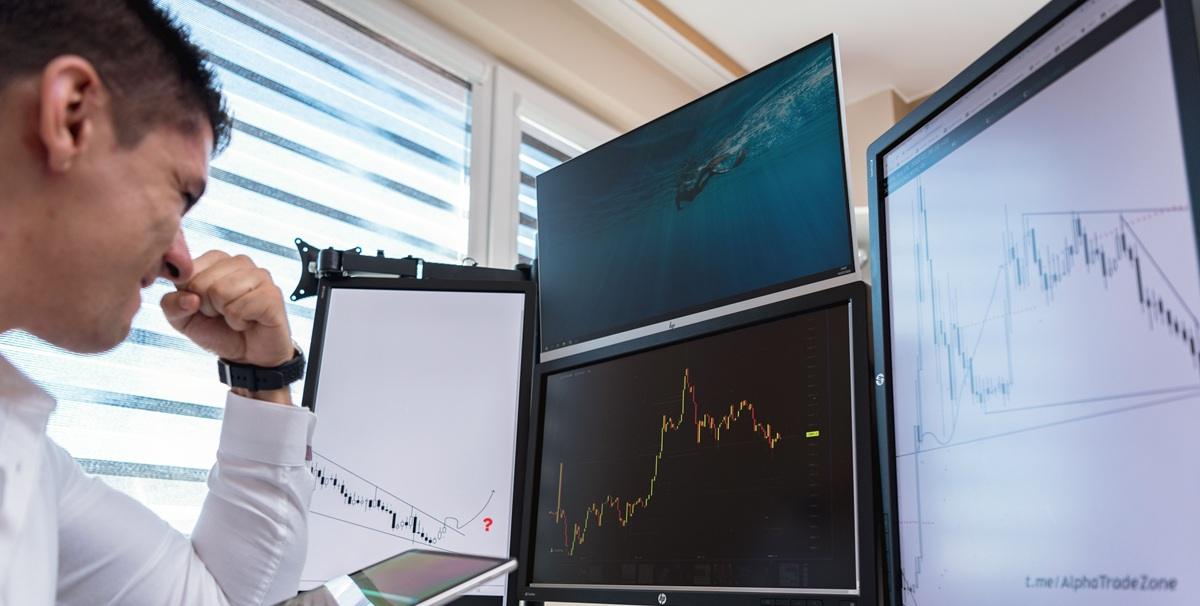
George Khoury, global head of research and education at CFI Financial Group, used a guest editorial to argue that retail prop trading firms have focused too heavily on the evaluation stage and should do more to develop traders once they are funded.
Khoury linked the growth of funded-trader programs to the wave of younger, less-capitalized retail traders who entered markets during the pandemic, many via crypto platforms before moving into FX, indices and commodities. Evaluations typically set a profit target, a daily drawdown limit and a deadline. He described that as a fair test of discipline under defined conditions, but said passing shows mainly that a trader can follow a risk framework and reach an objective. Sustained competence, he argued, depends on performance over months and across different market conditions, with the trader setting the rules.
Drawing on seven years as an independent trader, Khoury said he built automated strategies and tested other creators’ strategies before launch. Backtesting a single strategy once took him about six months of chart-by-chart work; today it takes seconds. Faster testing is useful, he said, but building a strategy specifically to exploit one evaluation’s rules can clear the test while revealing little about live trading. Some technology providers now offer tools to help firms detect that behavior. Simulated accounts can test execution, position sizing and rule discipline at no cost to the trader’s capital, but their main limitation is psychological: fear of losing real money changes behavior in ways a simulated balance cannot reproduce.
The longer test begins after funding, when payouts are at stake and continuous monitoring, guidance and experience matter most. Khoury said greed was his own worst trading emotion and that moving to rule-based automated systems, with parameters set in advance, changed his behavior. He uses a risk cap of around 2% of capital on any single position as a teaching illustration, while stressing that the right level depends on capital, objectives and experience. Total exposure also matters, he said, because several correlated 2% positions can create far more risk than any one trade suggests.
AI and behavioral analytics can identify recurring weaknesses—overtrading after a loss, raising position size after a run of wins or holding losing positions too long—and show traders those patterns. Khoury said AI should be treated as a fast, well-informed consultant while the trader retains the decision. To strengthen confidence in the model, he suggested prop firms publish post-evaluation data such as how many funded traders reach a first payout, how long funded accounts last and the most common breach reasons. He also proposed longer assessments that score position sizing and drawdown control across market conditions, and said regulators and the industry should clarify whether a trader is buying a simulated assessment or access to capital. He expects closer scrutiny and stronger verification of firms and traders.
CFI, he said, invests in market access, technology, research, education and client experience. Its CFI Academy offers structured multilingual courses plus seminars and webinars, while its trading app combines an AI assistant with behavioral analytics. CFI said the services are available through selected group entities and subject to local regulatory requirements.
Источник: FX News Group