2014issue C0222-26
Weekly option income adjustments with iron condors and butterflies
Historical weekly income cases show how an iron butterfly, a midweek add-on, a nine-day calendar, and an iron condor handled adjustments, size cuts, and early exits as short-dated delta and gamma rose.
- A weekly iron butterfly entered Thursday or Monday and preferred a four-day hold after realized volatility in the underlying rose.
- An early move toward the upper breakeven could convert the butterfly into an iron condor by rolling the call wing three or four strikes.
- After a four-week losing stretch in a 2013 rally, the condor case cut size in half and tested long options before planning a return to full size.
- Across these cases the shared rule was to exit two to three days before expiration or add protection, because near-expiration delta and gamma increase rapidly.
Weekly income as one procedure
These archive cases follow option income strategy as a short-dated premium-collection procedure with explicit entry, adjustment, and exit rules that can be tested as one process. The contracts were weekly options, listed options that expire in days rather than a full monthly cycle.
The starting structure was a butterfly spread, a defined-risk short-premium structure centered near the money, including the iron butterfly used as the starting weekly trade. A later case used an iron condor, a defined-risk short-premium structure with a wider profitable range than a centered butterfly, often created by rolling one wing after a directional move.
A Thursday or Monday iron butterfly
One weekly iron-butterfly case entered Thursday or Monday, preferring the four-day hold after realized volatility in the underlying rose. The same case collected an eight-to-eleven credit on an at-the-money iron butterfly with typically twenty-point wings and thirty contracts.
The case chose a highly liquid equity weekly so emergency market orders could be filled with limited slippage, while still treating aggressive delta and gamma as the main weekly-option risk.
Fire-drills and a roll into an iron condor
Delta was managed mainly with next-expiration options. The case used a fire-drill, a same-day review of possible next-open outcomes used to decide whether defensive hedges are needed. That review ran in a daily late session because the underlying often reversed after an early move.
An early approach to the upper breakeven could convert the butterfly into an iron condor by rolling the call wing three or four strikes, widening the expiration range at the cost of more capital and lower peak profit unless size was increased.
A later variant started midweek at half size and planned to add size the following Monday at updated strikes, trading weekend gap risk for a more flexible structure.
A nine-day calendar with a Wednesday exit
A nine-day calendar entered Tuesday or Wednesday. That structure is short a near weekly and long a farther monthly, typically entered about nine days before the near expiration. It targeted about twelve percent profit and a fifteen percent loss cap, with staged recentering rules and a hard Wednesday-before-expiration exit because late gamma rose sharply.
A condor losing stretch and a size cut
A separate weekly iron-condor case produced a long winner streak, then a four-week losing stretch during a persistent 2013 rally, including one loss of about one and one-half times expected return against a prior nineteen-week stretch averaging 3.5 percent. After that losing stretch the condor case cut size in half and tested long options at entry and as adjustments before planning a return to full size.
SPX condor P/L versus index after the butterfly roll
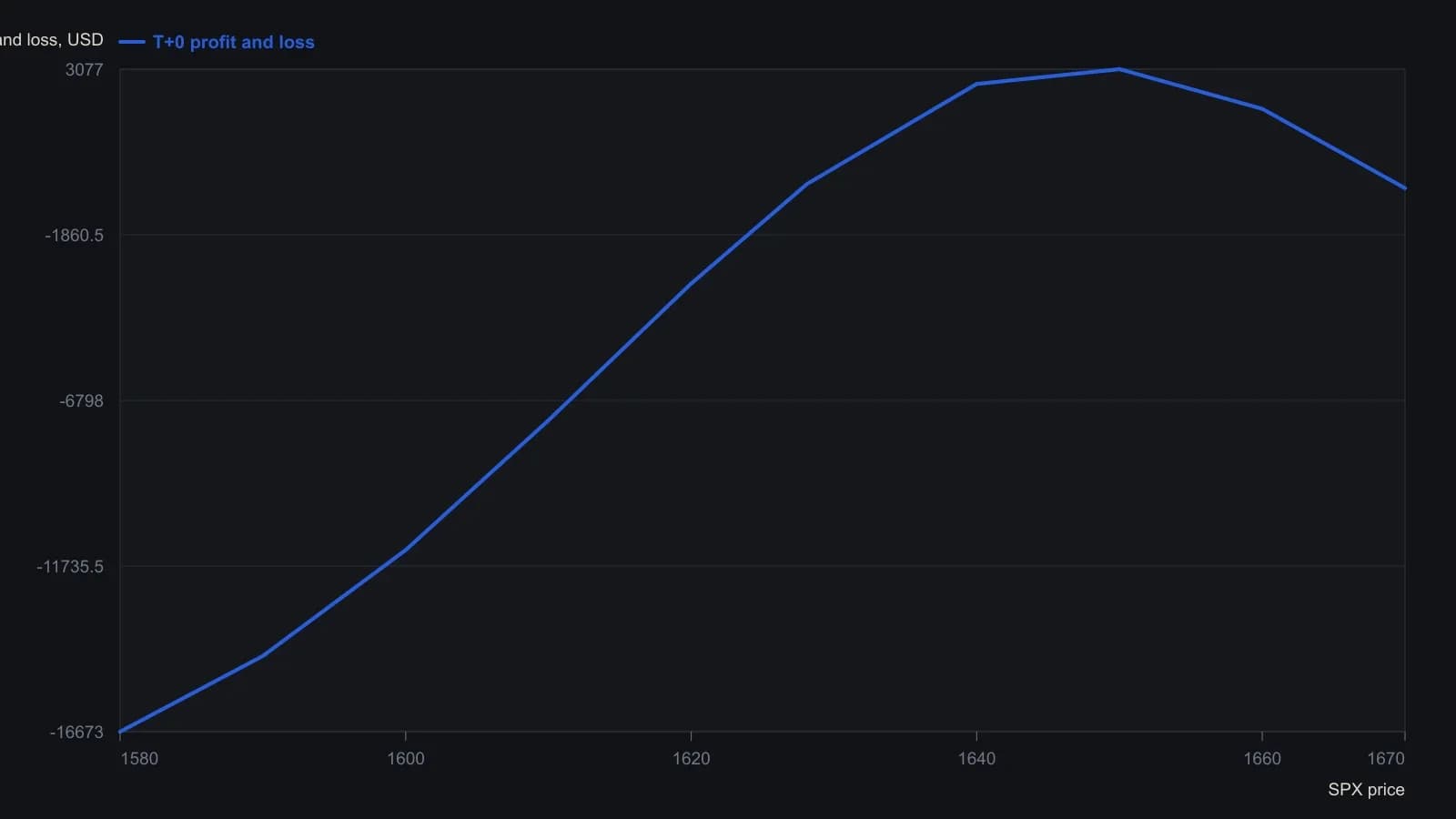
Read from the P/L row printed under the OptionNet Explorer risk profile dated 9 May 2013, eight days to the 17 May expiration. Those figures are mark-to-market P/L versus SPX, not the expiration butterfly and condor outlines also drawn on the same screen.
All readings on this track · 15 readings
- 2003Implied volatility regimes and range-condor context
- 2007Rewriting calendars and iron condors when volatility regimes shift
- 2008Option spreads, mental stops, and volatility regimes
- 2010Index condor overlays and delta repair
- 2010Equal and unequal strike geometry in a four-leg credit book
- 2010Sizing reserves for condors and pair layers
- 2012Iron condor adjustments when a favorite index breaks
- 2013Earnings-week implied volatility crush and iron condor wings
- 2013Iron condors, butterflies, and stops as one risk budget
- 2014Friday expiry as a weekly butterfly and iron-condor laboratory
- 2014A static iron condor is a market-regime overlay, not an expected-value filter
- 2014Weekly option income adjustments with iron condors and butterflies
- 2014Inverted iron-condor payoffs and misplaced reversal candles
- 2017Patient short-volatility income as a written procedure
- 2020A short iron condor is a weeks-to-months range-regime statement