2006issue C071-3
Order-book depth and passive flow for execution
The inside quote and volume-weighted average price record what already printed. Order-book depth lists standing buy and sell size that can still be reached, including passive order flow that is inserted or pulled without a fill.
- The best bid and ask omit standing interest away from the inside, so they are an incomplete map of nearby executable size.
- A print that hits the bid is a sell and a print that hits the ask is a buy; volume-weighted average price condenses those completed transactions.
- Passive order flow is unexecuted interest waiting to be hit, and it changes when a bid or offer is inserted or pulled without a fill.
- Full-depth flow can show size entering and leaving beyond the touch, exposing liquidity that last-sale and inside-quote screens do not show.
The layer beneath the inside quote
The inside quote is the current best displayed bid and offer, and it shows only the top of the book. Best bid and ask omit standing interest away from the inside, so they are an incomplete map of nearby executable size.
A depth-of-book view lists outstanding buy and sell orders that can be reached, which is the information layer beneath the inside quote. Order-book depth is that roster of standing buy and sell size at and away from the inside during the life of an order.
What a print already settled
A print that hits the bid is a sell and a print that hits the ask is a buy. Those trade-weighted transactions are what a volume-weighted average price condenses.
An aggressive order takes displayed size and prints a trade against the bid or the offer. Volume-weighted average price is a trade-weighted average of printed volume that summarizes completed transactions rather than resting interest.
Unexecuted interest still on the book
Passive order flow is unexecuted interest waiting to be hit, and it changes when a bid or offer is inserted or pulled without a fill.
Full-depth flow can show order size entering and leaving beyond the touch, exposing liquidity that last-sale and inside-quote screens do not show. A liquidity pool is a concentration of standing size away from the inside that can absorb or resist incoming flow.
MSFT standing size still working on each TotalView price
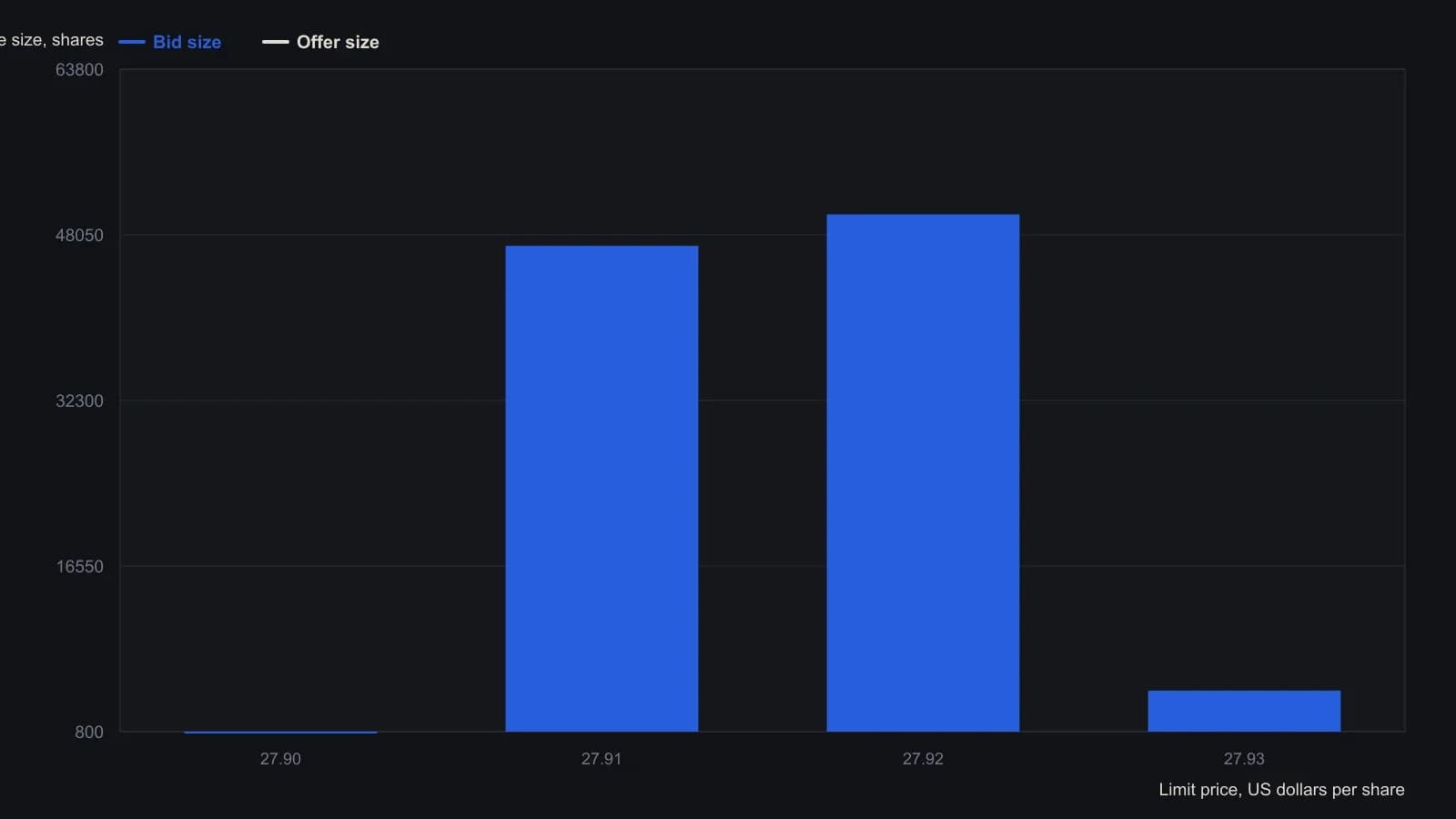
Only the visible ladder rows are summed. The screen’s inside strip printed 4,500 bid and 63,300 offered, a few hundred shares off these row totals, and the 5% header filters may hide additional size. Book stamps run 15:04–15:13; the quote strip reads 15:45.
How a falling offer was read
On a falling stock, small aggressive size hitting the offer while price keeps dropping was treated as continued weakness. Offers being taken without further downside was treated as a level starting to form.
Fast-market supply and demand is read from how resting bids and offers build or collapse against aggressive taking, an interaction barely visible on the inside or on a price chart.
Rest, take, or wait against the standing book
Implementation cost is the fill quality and slippage that depend on whether an order rests, takes, or chases given the book that actually exists.
Editorial: after the inside quote and volume-weighted average price are treated as a record of completed trade, the remaining job is to choose whether the next order rests, takes, or waits for the passive order flow and liquidity pools that are still waiting to be hit.
All readings on this track · 7 readings
- 1991Testing dealer inventory caps against a frozen order tape
- 2003Cheaper access still left a routing and cost problem
- 2006Order-book depth and passive flow for execution
- 2008Depth, close imbalances, and pairs on one clock
- 2012Checklist exits and the limits of visible book depth
- 2013Constructing forex orders from provider imbalance and book depth
- 2017Ladder, trail, and average as one execution ticket